
Laminate Flooring Installation

Laminate Flooring Installation in Dothan, AL
Laminate is often sold as a wood floor for less money. That is half true. It looks like wood, feels firmer underfoot than vinyl, and costs less than engineered hardwood. But laminate has a core made of wood fiber, and that core has one hard rule: it cannot get wet. Once water reaches the edges and soaks into that fiber, the plank swells and the damage cannot be reversed .
That single fact should shape every decision in a laminate project—which rooms it goes in, how the subfloor is prepped, and what underlay goes underneath. We install laminate across the Wiregrass with that boundary in mind. If you are planning a project, you can request a laminate flooring estimate and we will assess whether laminate is the right product for your rooms.
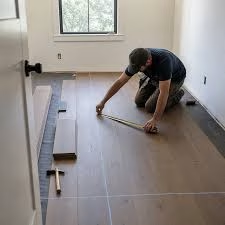
What Laminate Actually Is and Why It Matters
Understanding the construction explains the limitations better than any sales pitch.
The layers. Laminate starts with a high-density fiberboard core, made from wood fiber bonded with resin. On top sits a printed image layer that mimics wood or stone, and above that a clear wear layer that resists scratches and fading .
The wood-fiber core is the weak point. That core absorbs water. When moisture gets into the seams or edges, the fiber swells and the plank warps. Unlike vinyl, which is synthetic through and through, laminate cannot survive standing water or long-term dampness .
The wear layer is genuinely tough. Laminate resists scratches, dents, and fading better than many alternatives. For dry rooms with heavy foot traffic, it holds up well. An AC rating of 3 or higher suits most residential use .
It feels firmer than vinyl. Laminate is thicker and denser underfoot. Some homeowners prefer that solid feel; others find vinyl more comfortable. This is a preference, not a performance issue .
The Rooms Where Laminate Belongs (and Where It Does Not)
Because of the wood-fiber core, laminate has a clear map of where it works and where it fails.
Living rooms, bedrooms, and hallways. These are laminate’s best rooms. Dry conditions, moderate traffic, and a wood look at a lower price than hardwood. Luxury vinyl plank flooring is the alternative if you want a similar look with more moisture tolerance.
Dining rooms and home offices. Also suitable, provided spills are wiped promptly. Laminate handles occasional damp mopping, but not standing water .
Kitchens. Possible with caution. A dishwasher leak or an overflowing sink that sits overnight will damage laminate. Waterproof flooring installation is the safer choice if the kitchen sees heavy use or if leaks are a concern.
Bathrooms and laundry rooms. Not recommended. Steam, splash, and wet towels are routine in these rooms, and laminate will eventually fail at the seams . Bathroom flooring installation should default to tile or vinyl.
Basements. Risky in Alabama. Humidity and slab moisture are common in below-grade spaces. If laminate goes down there, moisture testing and a vapor barrier are non-negotiable .
Acclimation and Underlay: The Two Steps That Decide the Outcome
Laminate installation is often described as easy. The click system is simple enough. What is not simple is the preparation, and skipping it is why so many laminate floors fail early.
Acclimation. Laminate planks need to sit in the room where they will be installed for at least 48 hours before installation . The wood-fiber core expands and contracts with humidity. If you install it straight from a cold store into a warm, humid @fname@ home, it will move after installation rather than before. That movement shows up as gaps or buckling.
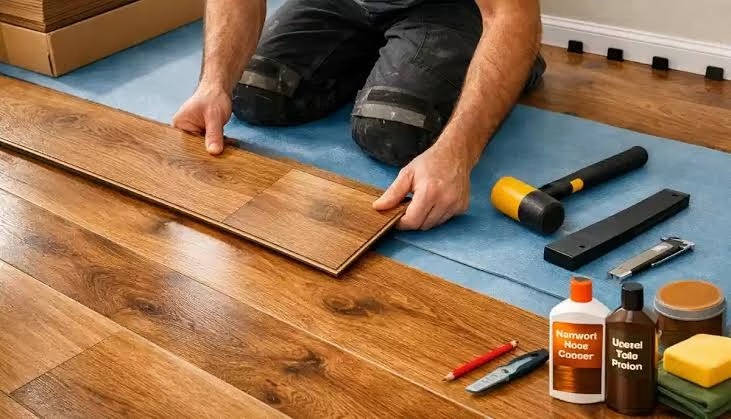
Underlay. Laminate is a floating floor, meaning it is not glued or nailed to the subfloor. The underlay sits between the planks and the subfloor and serves three purposes: sound dampening, a small amount of cushioning, and moisture protection . Without underlay, laminate sounds hollow and feels harder underfoot .
Expansion gaps. Laminate needs a small gap at every wall, hidden under trim. Skip it, and the floor pushes against the walls and buckles in the middle of the room .
Why this matters in Alabama. Wiregrass humidity is high for much of the year. Acclimation and the right underlay are not optional extras here. They are the difference between a floor that settles and one that moves.
Subfloor Requirements for Laminate
Laminate follows the shape of whatever is beneath it. A bump or dip will telegraph through and cause the click joints to separate or squeak.
Flatness. The subfloor must be flat, clean, dry, and firm . High spots get sanded; low spots get filled. Floor leveling handles this before installation.
Moisture. On concrete slabs, a damp-proof membrane or vapor barrier is needed to stop moisture from reaching the laminate core . On wood subfloors, we check for dampness and repair any soft spots. Subfloor repair handles damaged sections.
Old flooring removal. Laminate can sometimes go over existing hard surfaces, but only if the surface is flat and sound. In many cases, the old floor has to come out first. Flooring removal and disposal are part of the scope when that is needed.
Staggered joints. During installation, joints between rows must be staggered by at least 20–30 cm so the floor locks together as a unit rather than splitting along continuous lines .
How a Laminate Project Runs
1. Assessment. We measure the rooms, check the subfloor for flatness and moisture, and confirm whether laminate suits the space. If a room is too wet for laminate, we will say so and suggest alternatives.
2. Written estimate. The quote separates materials, underlay, labor, subfloor prep, and disposal so each part is visible.
3. Delivery and acclimation. Laminate arrives and sits in the room for at least 48 hours before installation .
4. Prep. Old flooring comes up if needed, and the subfloor is cleaned, leveled, and tested. Flooring removal and subfloor repair happen at this stage.
5. Underlay and installation. Underlay goes down, then the planks are clicked together with expansion gaps at the walls. Transitions to other rooms are fitted.
6. Trim and walkthrough. Baseboards or shoe molding go back on, and we walk the space with you to check joints and transitions before final payment.
Laminate vs. Other Flooring Options
Laminate competes with several materials, and the right choice depends on the room and the budget.
Laminate vs. vinyl. Vinyl is waterproof; laminate is not. Vinyl is softer underfoot; laminate feels firmer. Luxury vinyl plank flooring wins in kitchens, bathrooms, and rentals. Laminate wins in dry living areas where a firm, wood-like surface is wanted .
Laminate vs. engineered hardwood. Engineered wood has a real wood top layer and can be refinished. Laminate cannot. But laminate costs less and resists scratches better. Engineered hardwood flooring is the choice when long-term value and refinishing matter.
Laminate vs. carpet. Carpet is softer and quieter. Laminate is easier to clean and better for allergies. Carpet installation remains the practical choice for bedrooms where comfort matters most.
Laminate vs. tile. Tile is waterproof and permanent. Laminate is faster to install and warmer underfoot. Tile flooring installation is the right answer in wet rooms.
Repair and Replacement for Existing Laminate
Laminate cannot be refinished or sanded. When it fails, the options are narrower than for wood.
Plank replacement. If one or two planks are damaged, they can sometimes be replaced individually if matching material is available. Floor repair handles this for localized damage.
Water damage. Swollen or warped planks from moisture cannot be repaired. The affected section has to come out. If the damage is widespread, floor replacement is the practical answer.
Refinishing does not apply. Unlike hardwood floor refinishing, laminate has no surface wood to sand. The wear layer is the finish, and once it is worn through, the plank is done.
Areas We Serve
We provide laminate flooring installation across the Wiregrass region. The links below go to location pages with details for each community.
For broader residential projects, see our residential flooring services page. If you are outside these communities, contact us to confirm whether your location is within our service area.
Frequently Asked Questions
Is laminate flooring waterproof?
No. Laminate is water-resistant at the surface but not waterproof. Its core is made of wood fiber, and once water reaches that core, the plank swells and cannot be repaired . Waterproof flooring installation is the safer choice in wet rooms.
Which rooms should not have laminate?
Bathrooms, laundry rooms, and any space with routine standing water. Kitchens are possible with caution but carry risk from appliance leaks .
Why does laminate need to acclimate before installation?
The wood-fiber core expands and contracts with humidity. Letting planks sit in the room for at least 48 hours lets them adjust before installation, which prevents gaps and buckling later .
Does laminate need underlay?
Yes, for most installations. Underlay provides sound dampening, a small amount of cushioning, and moisture protection. Without it, the floor sounds hollow and feels harder underfoot .
Can laminate be installed over concrete?
Yes, with a damp-proof membrane or vapor barrier to stop moisture from reaching the laminate core . Moisture testing on the slab is part of the assessment.
Can damaged laminate planks be replaced?
Sometimes, if matching material is available and the damage is limited to one or two planks. Floor repair handles localized damage. Water-swollen planks cannot be repaired and must be replaced.
Can laminate be refinished?
No. Laminate has no surface wood to sand. Unlike hardwood floor refinishing, once the wear layer is gone, the plank has to be replaced.
Do you install laminate during remodels or new construction?
Yes. Flooring for remodels is sequenced around other trades, and new construction flooring is coordinated with the builder’s schedule.