
Bathroom Flooring Installation

Bathroom Flooring Installation in Dothan, AL
A bathroom floor faces water from three directions at once. From above: steam, splash, and the puddle that sits by the tub after every shower. From below: moisture rising through a slab or a crawl space. And from the edges: the gap at the base of the toilet, the transition at the doorway, the seam where the floor meets the tub. Most bathroom flooring failures are not the material’s fault. They are a failure to address one of those three directions.
We install bathroom flooring across the Wiregrass with the water managed first and the surface chosen second. If you are planning a bathroom project, you can request a bathroom flooring estimate and we will assess the substrate before recommending anything.
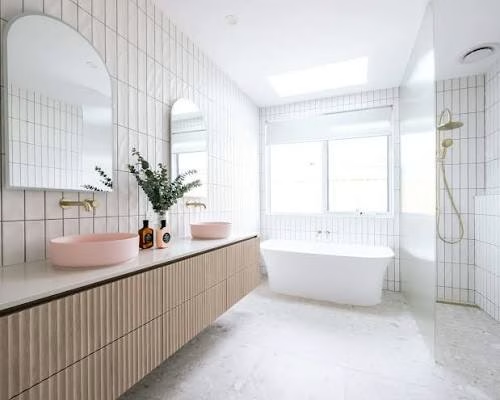
Why the Waterproofing Layer Matters More Than the Tile
Homeowners choose bathroom flooring by color and pattern. The waterproofing beneath it is what actually keeps the room dry.
Tile and grout are not waterproof. Water passes through grout lines and reaches the substrate below. A tile floor is only waterproof when a membrane sits beneath it, sealing the substrate from water that gets through the surface . The tile is the visible layer; the membrane is the functional one.
LVP is waterproof as a plank, not always as a floor. Luxury vinyl plank resists water on its surface. But water that reaches the seams, the perimeter gap, or the toilet flange can still get underneath . In a bathroom, those edges have to be sealed during installation.
The substrate decides whether water causes damage. A waterproof surface over a wood subfloor that gets wet will still fail from below. The substrate has to be dry and protected before anything goes on top. Our waterproof flooring installation page explains how the system approach works.
Slab moisture is a separate problem. Concrete slabs pull moisture up from the ground. That moisture reaches the adhesive, the membrane, or the bottom of the flooring material. We test for it before installation and specify a barrier when readings call for one.
Bathroom Flooring Options That Actually Handle the Room
Not every material belongs in a bathroom. The right choice depends on how wet the room gets and how much maintenance the homeowner wants.
Porcelain tile. The most durable and water-resistant option. Porcelain absorbs very little water and handles steam and splash without damage . It requires a substrate that is flat and stable, and the installation needs a waterproofing membrane beneath the tile. Grout lines need sealing or epoxy grout to resist staining.
Luxury vinyl plank and tile (LVP/LVT). Fully waterproof on the surface, warmer underfoot than tile, and easier to install . LVT gives a tile look without grout maintenance. LVP gives a wood look. Both need sealed edges and a sound substrate. In a bathroom, LVP seams and perimeter gaps have to be addressed during installation, not left open.
Sheet vinyl. The most watertight vinyl option because it has few or no seams . It suits small bathrooms and rental properties where budget and water resistance matter more than appearance.
What to avoid. Solid hardwood and laminate. Wood moves with bathroom humidity and warps or cups. Laminate has a wood-fiber core that swells when water reaches it . Carpet absorbs moisture and creates mold risk . Engineered wood is sometimes used in powder rooms but is not recommended in full bathrooms with showers.
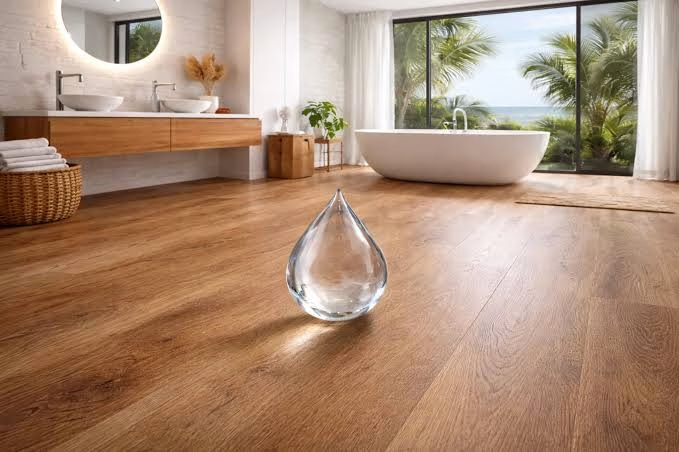
Preparing a Bathroom Subfloor
Bathroom subfloor work is more demanding than in any other room because there is no margin for moisture errors.
Remove the old flooring first. Old vinyl, tile, or carpet has to come up to expose the substrate. In many bathrooms, the old floor hides water damage around the toilet or tub. Flooring removal and disposal are part of the scope.
Check for soft spots and rot. The area around the toilet flange and the tub edge is where leaks show up first. Soft subfloor has to be repaired before new flooring goes down. Subfloor repair handles this, and floor leveling corrects unevenness before tile or vinyl.
Test for moisture. On slab foundations, we test for moisture coming up through the concrete. On wood subfloors, we check for dampness from below or from past leaks. A moisture barrier goes down if readings call for it.
Plan the waterproofing. For tile, an uncoupling membrane or waterproofing membrane goes down before the tile. For LVP, the perimeter and seams are sealed after installation. The waterproofing plan is decided before materials are ordered.
How a Bathroom Flooring Project Runs
1. Assessment. We measure the room, check the substrate for flatness and moisture, and discuss tile versus vinyl. This is where we flag whether subfloor repair or a waterproofing membrane is needed.
2. Written estimate. The quote separates materials, labor, substrate prep, waterproofing, and disposal so each part of the job is visible.
3. Removal and prep. Old flooring comes up, and the substrate is cleaned, repaired, and leveled. Flooring removal and subfloor repair happen at this stage.
4. Waterproofing. For tile, the membrane goes down. For vinyl, the substrate is prepped and the sealing plan is set.
5. Installation. Tile is set with thinset and grouted after curing. Vinyl planks are installed with expansion gaps and sealed at the perimeter and penetrations.
6. Fixtures and sealing. The toilet is reset with a new wax ring. Supply lines and transitions are checked and sealed where needed.
7. Walkthrough. We walk the finished floor with you and check seams, edges, and the toilet flange before final payment.
The Toilet Flange and Other Water Entry Points
The toilet flange is the most overlooked part of a bathroom floor. Water from a failing wax ring or a loose toilet seeps under the flooring and reaches the subfloor.
Reset the toilet with a new wax ring. When the floor changes height, the old wax ring may not seal. A new ring is standard practice whenever the toilet comes up.
Seal around the flange. The gap between the flooring and the drain pipe is a direct path for water. Sealant or a flange extension closes it.
Check the tub and shower edges. The seam where the floor meets the tub or shower base is a common leak point. Caulk or a trim piece covers it, and the seal has to be maintained over time.
Doorway transitions. The transition between bathroom flooring and hallway flooring is another opening. A proper transition strip seats the two floors together and keeps water from traveling under it.
Repair and Replacement for Bathroom Floors
Bathroom floors fail differently than floors in other rooms. When they do, the fix depends on what failed.
Cracked or loose tile. Individual tiles can sometimes be replaced if matching material is available. If the crack came from substrate movement, the substrate has to be fixed or the new tile will crack too. Floor repair handles localized damage.
Lifting vinyl plank. Usually a sign that moisture reached the adhesive or the substrate. The planks may need to come up and the substrate dried before reinstallation.
Water damage around the toilet. The subfloor around the flange may be soft or rotted. Subfloor repair is needed before new flooring goes down.
Full replacement. When the floor is water-damaged across the room or the substrate has failed, floor replacement is the practical answer.
Bathroom Flooring in Remodels and New Builds
Bathroom flooring is often part of a larger renovation. If the shower or tub is being replaced, the floor work has to be sequenced with the plumbing and waterproofing.
During a remodel, flooring for remodels is sequenced around plumbing rough-in, tile work, and fixture installation. If the shower is being updated, tile shower installation uses its own waterproofing system and is often handled in the same project.
For new construction, new construction flooring goes in after the substrate is ready and before fixtures are set. If the project involves multiple trades, our flooring contractor page explains the broader scope.
Areas We Serve
We provide bathroom flooring installation across the Wiregrass region. The links below go to location pages with details for each community.
For broader residential projects, see our residential flooring services page. If you are outside these communities, contact us to confirm whether your location is within our service area.
Frequently Asked Questions
What is the best flooring for a bathroom?
Porcelain tile and luxury vinyl are the practical choices. Porcelain is the most durable and water-resistant when installed with a waterproofing membrane . LVP and LVT are waterproof, warmer underfoot, and easier to install . Both work; the right one depends on budget and preference.
Is LVP really waterproof enough for a bathroom?
The plank itself is waterproof. The floor is only waterproof if the seams and perimeter are sealed and the substrate is protected. Water that reaches the subfloor through unsealed edges can still cause damage .
Why is waterproofing membrane needed under tile?
Tile and grout are not waterproof. Water passes through grout lines and reaches the substrate. A membrane beneath the tile seals the substrate from that water and prevents mold, rot, and substrate failure .
Can I install bathroom flooring over existing tile?
Sometimes, depending on the condition and height. Flooring installation over an existing floor is a different scope and carries different risks. The assessment visit determines whether it is viable.
Why does the toilet flange matter for bathroom flooring?
The flange is where the toilet connects to the drain. Water from a failing wax ring seeps under the flooring and reaches the subfloor. We reset the toilet with a new wax ring and seal around the flange whenever the floor changes.
Can a bathroom floor be repaired instead of replaced?
Sometimes. Individual tiles or planks can be replaced if the damage is localized and matching material is available. If the substrate has failed or water damage is widespread, floor replacement is the practical answer.
Do you install bathroom flooring during remodels?
Yes. Flooring for remodels is sequenced around plumbing and tile work. If the shower is being updated, tile shower installation can be part of the same project.
Do you handle bathroom flooring in rentals and businesses?
Yes. Commercial flooring services cover rental turnovers and commercial restrooms. Durability and water resistance drive the material choice in those settings.