
Hardwood Floor Refinishing

Hardwood Floor Refinishing in Dothan, AL
Refinishing is the only flooring service that removes material instead of adding it. Every pass of the sander takes off a thin layer of the wood itself. That is what makes a worn floor look new again. It is also what makes refinishing a one-way decision — there is a limited amount of wood to work with, and once it is gone, it is gone.
We refinish solid hardwood floors across the Wiregrass, and we assess the wood thickness before recommending anything. If you are wondering whether your floor can take another sanding, you can request a hardwood refinishing estimate and we will check the boards before quoting.
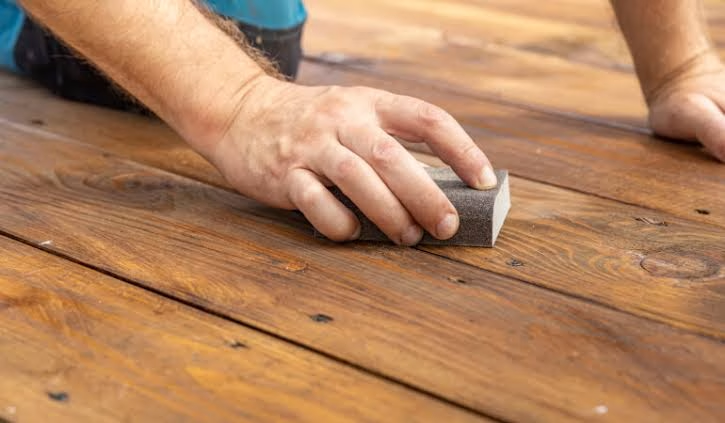
What Refinishing Actually Removes (and What It Reveals)
Refinishing strips the floor down to bare wood, then builds a new finish back up. The process is simple to describe and harder to execute well.
The old finish comes off. Polyurethane, varnish, wax, and stain all sit on the surface. Sanding removes them, along with scratches, stains, and the gray weathered layer that develops on old floors.
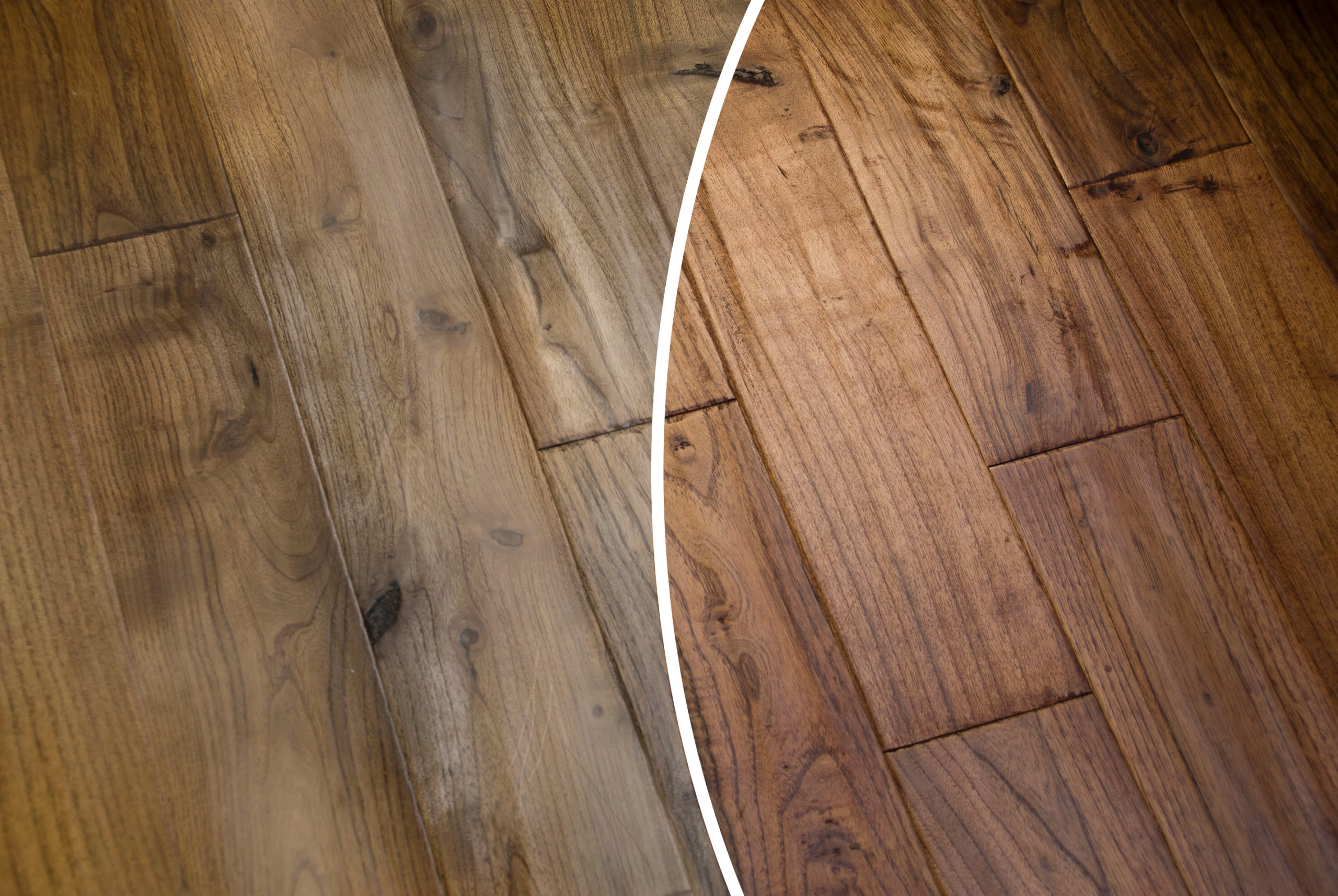
The wood underneath is exposed. This is the moment of truth. Refinishing reveals the actual color and condition of the wood. Water stains, pet stains, and dark spots that were hidden under the old finish may or may not sand out. Some go deep into the grain and stay visible even after a full sand.
A new finish goes on. Stain is optional. The topcoat — usually polyurethane — is what protects the wood and gives it the sheen. Water-based and oil-based finishes behave differently, and the choice affects drying time, color, and durability.
The wood gets thinner. Each full sand-and-refinish cycle removes a small amount of surface wood. Solid hardwood can typically be refinished four to six times over its life . After that, the boards are too thin to sand again without risking the tongue-and-groove joint.
Why Alabama Humidity Changes the Refinishing Schedule
Refinishing is a moisture-sensitive process. The finish has to cure between coats, and cure time depends on humidity and temperature.
Water-based finishes are the practical default in Alabama. Oil-based polyurethane cures slowly in Gulf Coast humidity. A coat that should be ready in a few hours can take much longer in a Wiregrass summer . Water-based finishes dry faster and are less affected by humidity, which makes them the working choice for most Alabama refinishing projects.
Summer jobs need climate control. Air conditioning or dehumidification running during the job keeps the finish curing on schedule. Without it, the crew either waits longer between coats or risks finish defects.
Spring and fall are the predictable windows. Humidity is lower and temperatures are moderate. If the project can be scheduled outside the summer months, the process runs more smoothly .
Dust control matters more than the finish choice. Traditional sanding produces fine dust that settles on every surface in the house. Dustless sanding uses vacuums attached to the sanders to capture most of it. The cost difference is real, but so is the difference in cleanup .
How a Refinishing Project Runs
1. Assessment. We check the wood thickness, look for cupping or water damage, and test whether stains will sand out. This is where we confirm whether refinishing is viable or whether floor replacement is the better answer.
2. Written estimate. The quote separates sanding, staining, finishing, and any repairs so each part is visible.
3. Preparation. Furniture moves out, and the space gets sealed off to contain dust. Any loose boards or small damaged areas get repaired before sanding begins. Floor repair handles localized issues.
4. Sanding. The old finish comes off in stages, using progressively finer grits. Edges and corners get hand-sanded or edged with a smaller machine.
5. Staining (optional). If a color change is wanted, stain goes on after sanding. This adds a day to the schedule and requires careful application to avoid lap marks.
6. Finishing. Multiple coats of polyurethane go on, with sanding between coats. Each coat needs time to cure before the next one.
7. Walkthrough. We walk the finished floor with you and check the sheen, color, and coverage before final payment.
Refinishing vs. Replacement: The Cost Reality
Refinishing costs significantly less than replacement, but the gap depends on the condition of the wood.
Refinishing costs less. A 1,000 square foot refinish in Alabama typically runs $3,000 to $5,500, depending on the finish and whether stain is involved . Replacement of the same area runs roughly $13,000 to $17,000 .
But refinishing only works if the wood is sound. If the boards are cupped, rotted, or too thin to sand, replacement is the only option. Our floor replacement services page covers the removal-and-install scope.
Screen-and-recoat is a cheaper middle option. If the existing finish is intact but dull, a light buff and a new topcoat costs far less than a full sand-and-refinish. It does not fix scratches or stains, but it extends the life of a floor that is otherwise in good shape .
DIY refinishing costs less upfront and more later. Renting a drum sander and doing the work yourself saves the labor cost, but failed DIY jobs require professional re-sanding to fix, which adds to the total .
Repairing Wood Floors Before Refinishing
Refinishing does not fix structural problems. Any repairs have to happen before the sander touches the floor.
Loose or squeaking boards. These need to be secured before sanding. A board that moves under the sander can splinter or create an uneven surface. Floor repair handles this.
Water stains and pet stains. Some stains sand out. Some have penetrated deep into the grain and will remain visible even after refinishing. We test a small area during the assessment to show you what is realistic.
Cupped or crowned boards. Cupping means the edges are higher than the center. Crowning is the reverse. Light cupping can sometimes be sanded flat, but severe cupping usually means moisture is still present and has to be addressed first.
Gaps between boards. Seasonal gaps are normal in Alabama humidity. Large gaps that stay open year-round may need filler before finishing, though filler can crack as the wood moves.
Subfloor issues. If the floor feels soft or bouncy, the subfloor beneath may be damaged. Subfloor repair handles that before refinishing.
Refinishing in Remodels and Older Homes
Refinishing is often part of a larger renovation. Timing matters because the finish needs to cure without interference from other trades.
During a remodel, refinishing should happen after dusty work like drywall and painting is finished. If the floor is being refinished as part of a flooring for remodels project, the schedule needs to account for cure time.
In older @fname@ area homes, refinishing is often the best way to preserve original heart pine or oak floors that cannot be replaced with the same character. If the project involves structural changes or multiple trades, our flooring contractor page explains the broader scope.
Areas We Serve
We provide hardwood floor refinishing across the Wiregrass region. The links below go to location pages with details for each community.
For broader residential projects, see our residential flooring services page. If you are outside these communities, contact us to confirm whether your location is within our service area.
Frequently Asked Questions
How many times can a hardwood floor be refinished?
Solid hardwood can typically be refinished four to six times over its life, depending on how much wood each previous sanding removed . Once the boards get too thin, refinishing is no longer safe.
How do I know if my floor can be refinished?
An on-site assessment checks the wood thickness, the type of flooring, and the condition of the boards. Solid wood with enough thickness left can be refinished. Engineered wood depends on veneer thickness. Laminate cannot be refinished.
Does refinishing remove scratches and stains?
Surface scratches and some stains sand out. Deep stains that have penetrated the grain may remain visible. We test a small area during the assessment to show you what is realistic.
How long does refinishing take?
A typical project takes several days, depending on square footage, the number of finish coats, and humidity. Stain adds time. The estimate should give a realistic schedule.
Is dustless refinishing worth it?
Dustless sanding captures most of the dust with vacuums attached to the equipment. It costs more than traditional sanding, but the difference in cleanup and indoor air quality is significant .
Can I stay in the house during refinishing?
It depends on the finish and the ventilation. Some finishes have strong odors and require the space to be empty during application and curing. We discuss this during the estimate.
Can engineered wood be refinished?
Sometimes, if the top veneer is thick enough. Many engineered products have veneers too thin for a full sand. The assessment determines whether your floor can take it.
What is the difference between refinishing and screen-and-recoat?
Refinishing sands down to bare wood and builds a new finish. Screen-and-recoat buffs the existing finish and adds a new topcoat without sanding to bare wood. Screen-and-recoat costs less but does not fix scratches or stains .