
Floor Replacement Services

Floor Replacement Services in Dothan, AL
Replacement is a different job from installation. When a floor goes down over a clean, sound surface, the work is mostly about layout and finish. When a floor comes out first, the project depends on what the tear-out exposes — and that is where estimates go wrong and budgets get blown.
We handle floor replacement as a single scope: removal, disposal, subfloor correction, and new installation, quoted together so the homeowner knows what the full job involves before it starts. If you are deciding whether replacement is necessary, you can request a floor replacement estimate and we will assess the existing floor before quoting.
What Floor Replacement Actually Includes
Homeowners often use “replacement” and “installation” as if they mean the same thing. They do not. Replacement carries extra steps that a straight installation does not.
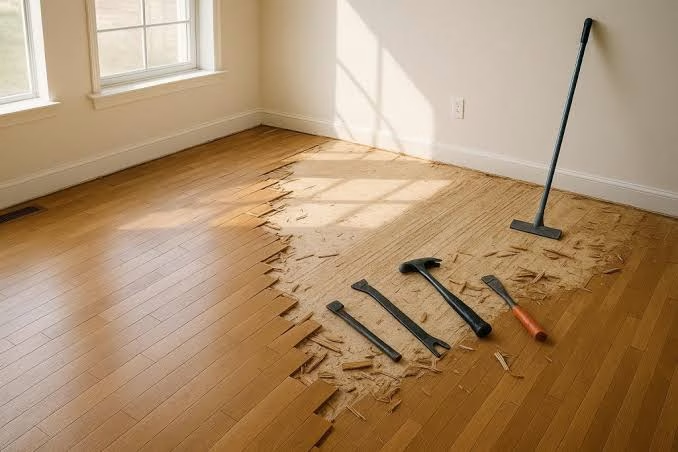
Tear-out. The existing flooring comes up. Carpet and pad, laminate planks, glued-down vinyl, nailed hardwood, and thinset tile each come out differently and take different amounts of time. Flooring removal covers this phase.
Disposal. Old flooring is heavy and bulky. Carpet, pad, tile, and underlayment all have to be hauled away, and disposal is part of the scope rather than an extra line item added later.
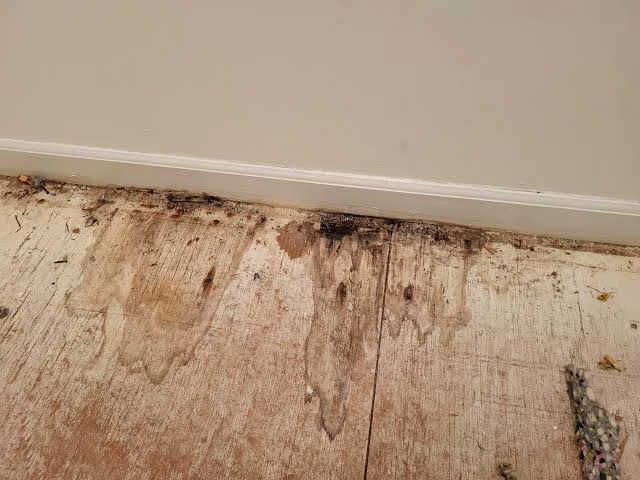
Subfloor exposure and correction. Once the old floor is gone, the subfloor is visible. Soft spots, water staining, uneven joints, and leftover adhesive all surface at this point. Subfloor repair and floor leveling address what is found.
New installation. Only after the substrate is sound does the new material go down — hardwood, luxury vinyl plank, tile, laminate, or carpet.
Trim and transitions. Baseboards, shoe molding, and doorway transitions are reinstalled or replaced so the finished floor looks complete.
Signs a Floor Needs Replacing Rather Than Repairing
Not every worn floor needs to come out. Replacement makes sense when the problems are widespread or structural.
Water damage across a large area. A single stained plank is a repair. A floor that has absorbed water across a room, swelled at the seams, and started to cup usually needs floor replacement rather than patching.
Multiple failed repairs. If the same area has been patched two or three times and keeps failing, the underlying problem is usually the substrate, not the surface. Floor repair will not solve it.
Cupping, crowning, or widespread gapping in wood. These point to moisture movement that has affected the whole floor. Hardwood floor refinishing only helps if the wood is still structurally sound.
Cracked tile across a room, not just one tile. Repeated cracking in the same zone usually means movement beneath the tile. New tile over the same substrate will crack again unless floor leveling or subfloor repair happens first.
A change of material. Moving from carpet to hard surface, or from tile to LVP, usually requires full removal because the new material needs a different substrate profile.
Layers stacked too high. Older homes sometimes have two or three flooring layers. At some point the stack has to come out, and that is a replacement scope.
What Tear-Out Often Reveals
The most useful thing a contractor can tell a homeowner before a replacement is what might be hiding under the old floor. In this region, a few things come up repeatedly.
Soft or rotted subfloor near wet areas. Bathrooms, kitchens, and laundry rooms are the usual locations. Damage around toilets, tubs, and appliances is common and has to be repaired before new flooring goes down.
Leftover adhesive and staples. Glued vinyl, carpet tack strips, and staples leave residue that has to be scraped or ground off. This step adds time and is easy to leave out of a cheap quote.
Uneven or patched subfloor. Previous repairs sometimes leave the surface out of level. Floor leveling corrects this before installation.
Multiple flooring layers. Carpet over vinyl over hardwood is not unusual in older homes. The number of layers determines how much removal work the project involves.
Slab moisture. On slab foundations, moisture can wick up through the concrete. It has to be tested and addressed, which is why waterproof flooring installation is often the safer choice in wet rooms.
This is why we assess before quoting, and why a replacement estimate should state clearly whether subfloor repair is included or billed separately if discovered.
How the Replacement Process Runs
1. Assessment. We look at the existing floor, identify how many layers are present, and check for signs of moisture or subfloor damage. The visit determines the likely scope.
2. Written estimate. The quote separates tear-out, disposal, subfloor work, materials, and installation so each part of the job is visible.
3. Scheduling and material order. Materials are ordered and, for wood products, allowed to acclimate before installation. Removal is scheduled so the home is not left with exposed subfloor longer than necessary.
4. Tear-out and disposal. Old flooring comes up and leaves the site. Flooring removal and haul-away are handled by the crew.
5. Subfloor correction. Soft spots are repaired, uneven areas are leveled, and moisture issues are addressed. This is the phase most cheap quotes skip.
6. Installation and finishing. New flooring goes down, transitions are fitted, and trim is reinstalled. Floor repair for any small issues is handled before the crew leaves.
7. Walkthrough. We walk the finished space with you and address anything that needs adjustment before final payment.
Replacement for Kitchens, Bathrooms, and Whole Homes
The scope of a replacement changes depending on how much of the house is involved.
Single-room replacement. Bathroom flooring installation and kitchen flooring installation are the most common single-room projects. These rooms see the most water damage and the most material changes.
Multiple rooms or whole house. When several rooms need replacement at once, whole house flooring installation is usually more efficient than scheduling each room separately. Removal, disposal, and installation can be sequenced to keep at least part of the house usable.
Remodels and new construction. During a renovation, flooring for remodels is sequenced around cabinet and trim work. For new builds, new construction flooring is a different scope entirely because there is nothing to remove.
Rental turnover. Property managers often need fast replacement between tenants. Commercial flooring services cover this scope, and luxury vinyl plank flooring is usually the standard choice for durability and speed.
Floor Replacement vs. Other Options
Replacement is not always the right answer, and a good contractor should say so.
Repair. When damage is limited to a small area, floor repair is faster and cheaper. Loose planks, a cracked tile, or a small soft spot can often be fixed without tearing out the room.
Refinishing. Solid hardwood that is structurally sound but worn or discolored can often be restored with hardwood floor refinishing. This avoids removal entirely.
New installation over existing. In some cases, new flooring can go over the old floor — but only when the existing surface is sound, flat, and at a workable height. Flooring installation over an existing floor is a different scope and carries different risks.
Full replacement. When the floor is water-damaged, structurally compromised, or when the new material needs a clean substrate, replacement is the practical answer. Floor replacement covers removal, prep, and installation together.
The assessment visit is where this choice gets made. The estimate should state which option applies and why.
Areas We Serve
We provide floor replacement services across the Wiregrass region. The links below go to location pages with details for each community.
For residential projects more broadly, see our residential flooring services page. If you are outside these communities, contact us to confirm whether your location is within our service area.
Frequently Asked Questions
What is included in floor replacement services?
Tear-out, disposal, subfloor assessment and correction, and new installation. The written estimate separates each part so the scope is visible before work begins.
How is replacement different from installation?
Installation puts new flooring into a space. Replacement includes flooring removal, disposal, and subfloor work before the new floor goes down. The two are often quoted separately.
How long does a floor replacement take?
It depends on the size and what tear-out reveals. A single bathroom is usually quicker than a whole house, and subfloor repair adds time. The estimate should give a realistic schedule.
What if you find subfloor damage during removal?
We address it as part of the project. The estimate states whether subfloor repair is included or billed separately if discovered, so there are no surprises.
Can you replace only part of the flooring?
Yes. Some projects replace only the damaged rooms or the customer-facing areas. Floor repair handles smaller areas when full replacement is not necessary.
Do you remove and dispose of the old flooring?
Yes. Flooring removal and disposal are part of the replacement scope. Old carpet, tile, laminate, and underlayment all leave the site.
Can new flooring be installed over the old floor instead?
Sometimes, but only when the existing floor is sound, flat, and at a workable height. Flooring installation over an existing floor is a different scope with different risks.
Do you handle replacement in rental properties?
Yes. Property managers often need fast replacement between tenants. Commercial flooring services cover this scope, and durable materials are usually specified.