
Floor Leveling Services

Floor Leveling Services in Dothan, AL
“Level” and “flat” are not the same thing, and confusing them is the most expensive mistake in floor leveling. A floor can be perfectly flat and still slope across a room. A floor can be dead level and still have a dip in the middle that telegraphs through tile. And a floor that bounces when you walk on it is not a leveling problem at all — it is a structural problem, and pouring self-leveler over it will crack within a year .
We level floors across the Wiregrass by identifying which of those three problems you actually have. If a new floor is going down and the substrate is not right, you can request a floor leveling estimate and we will measure the floor before recommending a method.
Flatness vs. Level vs. Structure: Three Different Problems
The floor under your feet can fail in three separate ways. Each one needs a different fix, and treating the wrong one wastes money.
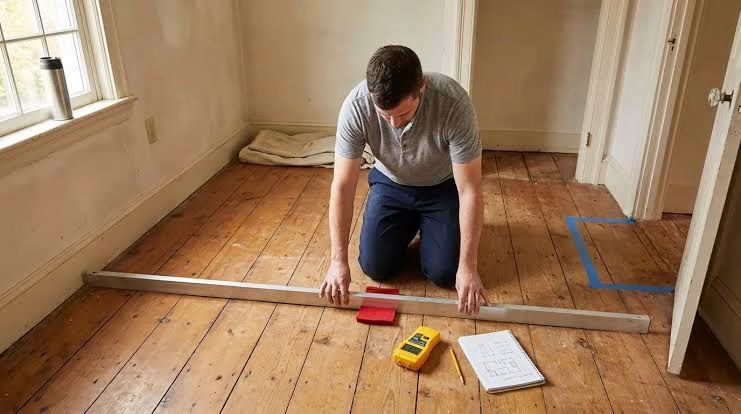
Flatness. Flatness is about how the surface behaves under a straightedge. The flooring industry standard for most hard surfaces is 3/16 inch in 10 feet, or 1/8 inch in 6 feet . A floor within that tolerance is flat enough for tile, vinyl, or wood. A floor outside it will show dips or humps in the finished surface. Flatness is a surface problem, and self-leveling compound is the tool for it.
Level. Level is about gravity. A floor can be flat and still slope toward one side of the house. Old homes settle, and a consistent slope is often structural rather than cosmetic. Forcing an old floor dead level can pop trim, crack plaster, and leave doors swinging . In most renovations, the goal is flat enough to install over, not level to a laser.
Structure. A bouncy floor, a soft spot, or a floor that moves underfoot is a structural problem. The joists may be undersized, sagging, or rotted. Self-leveling compound is rigid and cracks when the floor beneath it flexes . Fixing structure means sistering joists, adding blocking, or repairing the subfloor before any leveling product goes down.
Signs You Have a Leveling Problem (and Which Kind)
The symptom tells you which of the three problems you are dealing with.
Dips and humps that show through the finished floor. Tile cracks along a line, vinyl planks rock, or hardwood shows a visible wave. This is a flatness problem. The substrate is uneven, but the structure beneath it is sound.
A consistent slope across a room. The floor drops steadily from one wall to the opposite wall. This is a level problem, and it is often structural. In older homes, the slope may be original and not worth correcting .
A bounce when you walk. The floor moves underfoot. This is a structural problem. Self-leveler over a bouncy floor will crack. The joists need to be stiffened first.
A soft or spongy spot. Localized rot or water damage. This is a subfloor repair problem before it is a leveling problem. Subfloor repair handles the damage; leveling comes after.
Squeaks and movement. Fasteners have loosened, or the subfloor has separated from the joists. Squeaks are often a fastening problem rather than a leveling problem, but they can point to movement that needs correction before leveling.
Cracks in concrete. On slab foundations, cracks can indicate settling, shrinkage, or temperature movement. Not every crack means the slab is out of level, but cracks combined with visible unevenness usually do .
The Leveling Methods and When Each One Applies
Each method solves a specific problem. Using the wrong one produces a floor that looks fine for a season and fails after that.
Self-leveling compound (SLU). A pourable cementitious mix that flows out under gravity and cures into a flat plane. It is a flatness tool, not a structural tool . It works when the subfloor is solid and the surface is irregular — cupped boards, high seams, or a dip of a quarter inch to half an inch. On wood subfloors, most products require metal lath and a primer, or the cured layer will lift and crack . Thin feathered edges are the most likely to crack, so the pour needs enough depth to hold together.
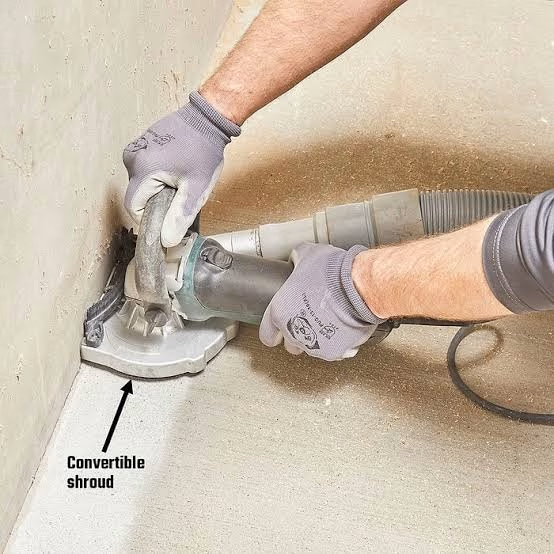
Grinding high spots. When the problem is a hump rather than a dip, grinding shaves the high area down. This is common on concrete slabs and on subfloor seams that sit proud of the surface. Grinding is a subtractive method, and it produces dust, so containment matters.
Joist sistering. When the floor bounces or sags, a new joist is bolted or screwed alongside the existing one to add stiffness. This is a structural fix, and it has to happen before any surface leveling . Sistering is more invasive than a pour, but it solves the problem that a pour cannot.
Plywood shimming or overlay. A layer of plywood is cut and fitted to bring low areas up to the surrounding surface. This works for gradual unevenness and for transitions between rooms with different floor heights. It adds height to the floor, which affects door clearances and transitions.
Subfloor replacement. When the subfloor itself is damaged or badly uneven, replacing the affected section is more reliable than trying to level over it. Subfloor repair covers this scope.
Why Leveling Fails When the Diagnosis Is Wrong
The most common leveling failure is a pour over a structural problem.
Self-leveler over a bouncy floor. The compound is rigid. The floor flexes. The compound cracks along the flex lines . The homeowner paid for a leveling job and got a cracked surface within a year.
Self-leveler over a soft subfloor. If the subfloor has rotted or delaminated, the leveling compound bonds to a surface that is not sound. The whole layer lifts or crumbles.
Skipping the primer. On concrete, unprimered surfaces absorb water from the compound, which causes cracking and poor adhesion. Primer is not optional .
Pouring too thin. Feathered edges crack. Most products need a minimum thickness to hold together, and that minimum varies by product .
Forcing an old floor dead level. In older homes, the building has settled into its geometry. Forcing the floor level can crack plaster, bind doors, and create new problems that did not exist before . Flat enough to install over is the right target in most renovations.
How We Assess a Floor Before Leveling
The assessment decides which method applies. We measure, check the structure, and look for moisture.
Straightedge measurements. We lay a 10-foot straightedge across the floor in several directions and measure the largest gap beneath it. That number tells us whether the floor is within tolerance or outside it .
Bounce test. We walk the floor and check for movement. A floor that bounces is a structural problem, not a flatness problem.
Subfloor inspection. We check for soft spots, movement, and damage. On pier-and-beam homes, we inspect from the crawl space. Subfloor repair is scheduled before leveling if damage is found.
Moisture testing. On slabs, we test for moisture coming up through the concrete. Leveling compound over a wet slab can fail. Waterproof flooring installation may be the better answer in rooms with moisture risk.
Transition and height check. Leveling adds height. We check door clearances, toe kicks, and transitions to adjoining rooms before deciding how much material goes down.
How a Floor Leveling Project Runs
1. Assessment. We measure flatness with a straightedge, check for bounce, inspect the subfloor, and test for moisture. The assessment determines whether the fix is a pour, a grind, a structural repair, or a combination.
2. Written estimate. The quote separates diagnosis, prep, material, labor, and any structural work so each part is visible.
3. Structural correction (if needed). If the floor bounces or sags, joist sistering or subfloor repair happens first. Subfloor repair and floor repair cover the repair scope.
4. Surface preparation. The floor is cleaned, high spots are ground down, and the perimeter is dammed to contain the pour. Primer goes on where the product requires it.
5. Leveling. Self-leveling compound is mixed and poured, or plywood is cut and fitted, depending on the method.
6. Curing. The compound cures before any flooring goes down. Cure time depends on the product and the thickness.
7. Flatness verification. We check the finished surface with a straightedge before the new floor is installed.
If the leveling is part of a larger project, flooring for remodels is sequenced so leveling happens after structural work and before new flooring. If the project involves multiple trades, our flooring contractor page explains the broader scope.
Areas We Serve
We provide floor leveling services across the Wiregrass region. The links below go to location pages with details for each community.
For broader residential projects, see our residential flooring services page. If you are outside these communities, contact us to confirm whether your location is within our service area.
Frequently Asked Questions
What is the difference between level and flat?
Level means the floor is perpendicular to gravity — it does not slope. Flat means the surface is even under a straightedge. A floor can be flat and still slope. Most flooring installations need flat, not level .
How flat does a floor need to be for new flooring?
The standard for most hard surfaces is 3/16 inch in 10 feet, or 1/8 inch in 6 feet. Some rigid vinyl products tighten that to 1/8 inch in 10 feet. Check the flooring manufacturer’s spec sheet .
Can self-leveling compound fix a bouncy floor?
No. Self-leveling compound is rigid and cracks when the floor beneath it flexes. A bouncy floor needs structural correction — joist sistering or subfloor repair — before any leveling product goes down .
Why does self-leveler crack?
The most common causes are pouring over a floor that flexes, skipping the primer, pouring too thin at the edges, or applying it over a wet or dirty substrate .
How much does floor leveling cost?
Cost depends on the method and the scope. Self-leveling compound for minor dips is the least expensive. Grinding high spots costs more. Joist sistering is a structural repair and costs more than a surface pour. A written estimate gives the real number for your floor.
Can I level just part of a room?
Yes. Spot leveling the low areas is common and saves material. Mark the low spots, level those, and feather the edges. The result is flat enough for flooring without pouring across the whole room.
Do I need to remove the old flooring before leveling?
Usually, yes. Leveling compound goes on the subfloor or slab, not over finished flooring. If the old floor is coming out anyway, leveling during that project is more efficient.
Do you level floors during remodels or floor replacement?
Yes. Flooring for remodels is sequenced so leveling happens after structural work and before new flooring. During a floor replacement, leveling happens after removal and subfloor repair.