
Hardwood Floor Repair

Hardwood Floor Repair in Dothan, AL
A hardwood floor rarely fails all at once. It gives warnings first — a squeak in one spot, a board that lifts slightly at the edge, a dark ring near a doorway, a gap that opens every summer and does not close. Each of those symptoms points to a specific cause, and each cause has a different repair.
That is why repair starts with diagnosis, not with a hammer. We repair hardwood floors across the Wiregrass by finding out what is actually wrong before we touch a board. If you have a problem area and want to know whether it can be fixed, you can request a hardwood floor repair estimate and we will assess the floor before quoting.
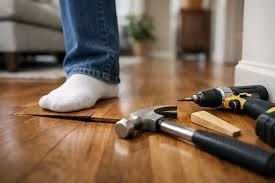
What the Symptom Tells You About the Cause
The problem you can see on the surface usually points to something happening below or around it. Reading that symptom correctly is the whole job.
Squeaks and creaks. Two boards rubbing against each other, or a board moving against a joist or subfloor. Squeaks are often a fastening problem, not a wood problem. Sometimes the fix is a few screws through the subfloor; sometimes the subfloor itself has loosened.
Loose or lifting boards. Boards that lift at the edges or rock underfoot usually mean the fasteners have failed or the subfloor has moved. If the lifting is widespread, it can point to moisture, and that has to be addressed before any board is re-secured.
Gaps between boards. Small seasonal gaps are normal. Wide gaps that stay open year-round point to installation issues, drying from below, or a humidity problem in the home. Filling gaps without finding the cause is a temporary fix at best.
Cupping and crowning. Cupping means the board edges are higher than the center. Crowning means the center is higher than the edges. Cupping almost always means moisture is reaching the floor from below. Crowning usually follows a previous cupping problem or a moisture imbalance in the home.
Dark stains and rings. Water stains, pet stains, and dark rings near plumbing fixtures point to a leak that may still be active. The stain is a symptom; the source has to be found.
Splinters and gouges. Physical damage from dropped objects, furniture, or pets. These are surface problems and usually the most straightforward to repair.
The Repair Options for Each Problem
Once the cause is identified, the repair method follows. Some fixes are small; some are not.
Squeak repair. We locate the squeak, determine whether it is a board-to-board or board-to-joist issue, and fasten accordingly. From below, screws or shims through the subfloor work. From above, countersunk screws or lubricant in the joint can solve it without removing boards. Floor repair covers this category.
Loose board re-securing. Boards that have lifted can often be re-nailed or re-glued and clamped back into place. If the board is too damaged to re-secure, it gets replaced. Matching the wood is the challenge, and it depends on the age and species of the existing floor.
Board replacement. Damaged or rotted boards are cut out and replaced. The replacement board has to match thickness, species, and finish. On older floors, finding a match can be difficult. Our floor replacement services page covers full-floor replacement when repair is not practical.
Gap filling. Small seasonal gaps can sometimes be filled with wood filler or slivers of matching wood. This is cosmetic and may need redoing as the floor continues to move. If the gaps are caused by a humidity problem, the fix is climate control, not filler.
Cupping correction. Light cupping can sometimes be sanded flat once the moisture source is fixed. Severe cupping may require board replacement. If the moisture is still active, sanding will not solve it. Our hardwood floor refinishing page explains how sanding works and when it is appropriate.
Stain treatment. Surface stains can sometimes be sanded out. Deep stains that have penetrated the grain may not come out, even after sanding. Oxalic acid treatment can lighten some water stains but does not always work. The assessment determines what is realistic.
Subfloor repair. If the damage extends below the hardwood, the subfloor has to be repaired before the boards are fixed. Subfloor repair and floor leveling are often part of the same project.
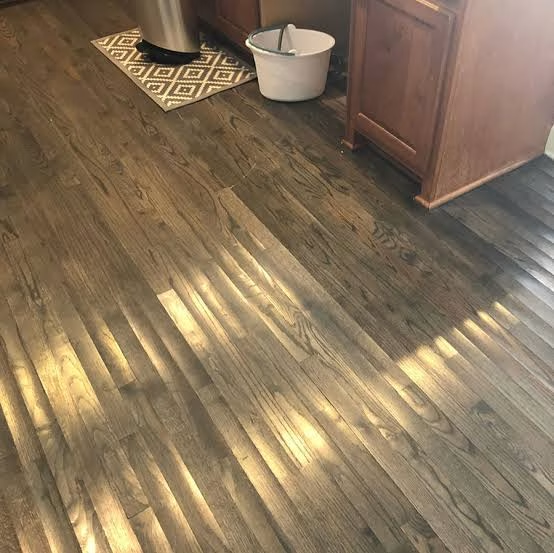
When Repair Is Not Enough
Some problems look like repair jobs and are actually replacement jobs. A good contractor should say so before charging for a fix that will not last.
Widespread cupping or water damage. If most of the floor has cupped or swelled from a water event, repairing individual boards will not solve the problem. The whole floor has to come up. Floor replacement covers that scope.
Boards too thin to sand. If the floor has been refinished several times, there may not be enough wood left to sand out damage. Replacing individual boards is possible but difficult to match.
Rot or structural failure. Soft, spongy boards or joists that have rotted from moisture cannot be repaired with surface fixes. The rot has to be cut out and replaced.
Failed previous repairs. If the same spot has been repaired two or three times and keeps failing, the underlying problem has not been found. Repairing it again will produce the same result.
Engineered and laminate floors. Engineered wood can sometimes have individual planks replaced, but the layered construction limits what is possible. Laminate cannot be repaired the way solid wood can. Our engineered hardwood flooring and laminate flooring installation pages explain the limits.
Why Alabama Homes See Certain Repairs More Often
Local conditions create predictable repair patterns. In the Wiregrass, the same problems show up repeatedly.
Humidity-related cupping. Alabama humidity swings through the year. Wood moves with those swings, and when the movement is uneven, boards cup. Crawl space humidity is often the underlying cause. Vapor barriers and better ventilation reduce it.
Leaks near plumbing fixtures. Toilets, sinks, dishwashers, and washing machines all leak eventually. The damage shows up as a dark ring on the floor near the fixture. Finding and fixing the leak is the first step; repairing the floor is the second.
Squeaks in older homes. Older Alabama homes often have subfloors that have loosened over decades. Squeaks are common in hallways and near doorways where traffic is heaviest.
Pet stains. Pet urine penetrates the finish and the wood. Surface cleaning helps, but deep stains may require sanding or board replacement. Homes with pets see this repeatedly.
Termite and moisture damage. Alabama sits in a region where termites are active. Soft or hollow-sounding boards can be a sign of damage that needs to be assessed before repair.
How a Hardwood Repair Project Runs
1. Assessment. We look at the problem area, identify the likely cause, and check whether the fix is a local repair or a sign of a larger issue. If the cause is moisture, we check the subfloor and the surrounding boards.
2. Written estimate. The quote separates diagnosis, labor, materials, and any subfloor work so each part is visible.
3. Preparation. Furniture moves out of the work area. If the repair involves sanding or finishing, the space gets sealed off to contain dust.
4. Repair. The specific fix depends on the problem — squeak fastening, board replacement, gap filling, stain treatment, or subfloor repair. Floor repair covers the local scope.
5. Finishing. If the repair involved sanding or board replacement, the affected area gets finished to match the surrounding floor. Matching an older finish is not always exact, and we tell you that upfront.
6. Walkthrough. We walk the repaired area with you and check that the fix solved the problem and that the finish blends as well as possible.
Repair or Refinish or Replace?
The repair decision is often a question of scope. A small fix, a full refinish, or a full replacement are three different projects.
Repair handles a specific problem: a squeak, a loose board, a small stain, a damaged plank. It is the fastest and cheapest option when the problem is localized.
Refinishing handles surface wear across the whole floor: scratches, dull finish, light stains, worn traffic paths. Hardwood floor refinishing removes the top layer and applies a new finish. It does not fix structural problems.
Replacement handles floors that are too damaged to repair or refinish: widespread cupping, rot, water damage, or boards too thin to sand. Floor replacement covers the full scope.
The assessment visit determines which option applies. The estimate should state clearly which one you are getting and why.
Areas We Serve
We provide hardwood floor repair across the Wiregrass region. The links below go to location pages with details for each community.
For broader residential projects, see our residential flooring services page. If you are outside these communities, contact us to confirm whether your location is within our service area.
Frequently Asked Questions
Can a squeaky hardwood floor be fixed?
Usually, yes. Squeaks are caused by boards rubbing against each other or against a joist, or by fasteners that have loosened. Depending on the cause, the fix can be as simple as driving screws through the subfloor or re-securing a board.
Can cupped boards be flattened?
Light cupping can sometimes be sanded flat once the moisture source is fixed. Severe cupping may require board replacement. If the moisture is still active, sanding will not solve the problem.
Can I fill gaps between boards?
Small seasonal gaps can sometimes be filled with wood filler or slivers. However, filler can crack as the floor continues to move. If the gaps are caused by a humidity problem, the fix is climate control, not filler.
Can water stains be removed?
Surface stains can sometimes be sanded out. Deep stains that have penetrated the grain may not come out, even after sanding. Oxalic acid treatment can lighten some water stains but does not always work.
Can individual boards be replaced?
Yes, if matching material is available and the surrounding floor is sound. The replacement board has to match thickness, species, and finish. On older floors, finding a match can be difficult.
When is repair not enough?
When the damage is widespread, the boards are too thin to sand, the subfloor has failed, or the same spot keeps failing after repeated repairs. In those cases, floor replacement is the practical answer.
Do you repair engineered wood and laminate floors?
Engineered wood can sometimes have individual planks replaced, but the layered construction limits what is possible. Laminate cannot be repaired the way solid wood can. Our engineered hardwood flooring and laminate flooring installation pages explain the limits.
Do you repair hardwood floors during remodels or after water damage?
Yes. Repair is often part of a larger renovation, and water damage repair is common. The source of the water has to be fixed before the repair. Waterproof flooring installation is worth considering in rooms where water damage is likely to happen again.