
Kitchen Flooring Installation

Kitchen Flooring Installation in Dothan, AL
A kitchen floor takes more abuse than any other floor in the house. It carries the weight of appliances that never move. It absorbs the impact of dropped cans, pans, and knives. It handles grease, spills, and the slow drip under the sink that nobody notices until the cabinet base swells. And it has to do all of that in a room where the floor is often the largest continuous surface you see.
We install kitchen flooring across the Wiregrass with the working parts of the room in mind — the appliances, the sink, the doorway, and the cabinets that sit on top of the floor. If you are planning a kitchen project, you can request a kitchen flooring estimate and we will assess the space before recommending anything.
The Kitchen Problems That Decide Which Floor Works
The kitchen has its own specific failure patterns. Understanding them makes the material choice much less arbitrary.
Appliance weight. A refrigerator, range, and dishwasher all sit on the floor and never move. That concentrated weight can compress a soft pad, crack a tile over a void, or dent a vinyl plank that is not rated for heavy loads. The substrate has to be solid under the appliances, not just in the middle of the room.
Hidden leaks. The area under the sink, behind the dishwasher, and behind the refrigerator is where slow leaks go unnoticed for months. By the time the floor shows damage, the subfloor has often been wet for a long time. Subfloor repair is common in kitchens for that reason.
Dropped objects. A can of soup dropped on tile can crack the tile. A knife dropped on vinyl can gouge it. A heavy pan dropped on laminate can split the plank. No flooring material survives everything, and the right choice depends on which risk matters most.
Grease and staining. Kitchens produce grease that settles on the floor and stains grout, dulls finish, and works into seams. Materials differ in how easily they clean up.
Doorway transitions. The kitchen usually connects to a hallway, living room, or dining room. The transition has to be flush enough that it is not a trip hazard and clean enough that it does not look like an afterthought.
Kitchen Flooring Materials Compared
Each material has a specific role in the kitchen. None is universally best.
Porcelain tile. The most durable and water-resistant option. Porcelain handles spills, heat, and heavy loads well. It needs a flat substrate and a waterproofing or uncoupling membrane beneath it. Grout lines need sealing or epoxy grout to resist grease staining. Tile is hard underfoot, which matters in a kitchen where people stand for long periods. Tile flooring installation covers the full scope.
Luxury vinyl plank and tile. Waterproof on the surface, warmer underfoot than tile, and easier on dropped dishes. LVP gives a wood look; LVT gives a tile look without grout. Both handle the kitchen well when the edges are sealed and the substrate is sound. Luxury vinyl plank flooring is the most common choice for kitchens today.
Sheet vinyl. The most watertight vinyl option because it has few or no seams. It is not as durable as porcelain, but it is the practical choice in rental kitchens and budget renovations where water resistance and easy cleanup matter more than long-term wear.
Engineered hardwood. Possible in a kitchen if the homeowner accepts the risk of appliance leaks. Engineered wood handles humidity better than solid wood, but standing water is still a problem. Many homeowners choose it for appearance and accept the trade-off. Engineered hardwood flooring covers the construction.
Solid hardwood. Not recommended in a kitchen. It moves with humidity and is vulnerable to leaks and spills. Hardwood floor installation works well in living rooms and bedrooms, but the kitchen is a harder sell.
Laminate. Affordable and looks like wood, but the wood-fiber core swells if water reaches it. A dishwasher leak or a sink overflow that sits overnight can damage it. Laminate flooring installation explains the limits.
Laying Out the Floor Around Cabinets and Appliances
Kitchen flooring installation is not just laying planks across a room. The layout has to account for the things that sit on the floor.
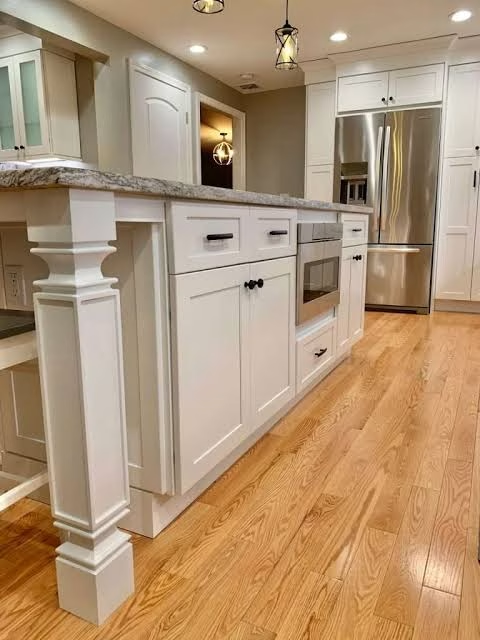
Cabinets and islands. In most kitchens, the flooring goes under the appliances but not under the cabinets. Cabinets sit on the subfloor, and the flooring butts up to the cabinet base. That is the standard approach because it saves material and because cabinets are rarely moved. In some renovations, flooring goes wall to wall under the cabinets, but that is a design choice and costs more.
Toe kicks and cabinet bases. The flooring meets the cabinet base at the toe kick. That edge has to be clean and sealed so water cannot run under the cabinet. In older kitchens, the toe kick may be damaged from past leaks, and that has to be repaired before the new floor goes down.
The refrigerator and range. These appliances sit in openings in the cabinet run. The flooring goes all the way into those openings so the appliance sits on the finished floor, not on the subfloor. When the appliance is pulled out for service or replacement, the flooring is already there.
The dishwasher. The dishwasher sits next to the sink and is one of the most common leak sources. The flooring goes under the dishwasher space, and the area around it should be sealed.
Thresholds and transitions. The doorway to the kitchen gets a transition strip that seats the kitchen flooring to the adjoining floor. The transition has to be flush enough to walk over without catching a foot.
Preparing a Kitchen Subfloor
The substrate work in a kitchen is often more involved than in other rooms because of what has to be moved and what is discovered underneath.
Move the appliances first. The refrigerator, range, and dishwasher come out before the old floor goes down. That is also when hidden leaks are discovered. In many kitchens, the floor behind the refrigerator is the worst area in the room.
Remove the old flooring. Old tile, vinyl, or carpet comes up. In older kitchens, there may be multiple layers. Flooring removal and disposal are part of the scope.
Check for soft spots and rot. The area around the sink, dishwasher, and refrigerator is where subfloor damage concentrates. Soft spots have to be repaired before any new flooring goes down. Subfloor repair handles this.
Level the surface. Kitchen subfloors have to be flat, especially for tile and rigid vinyl. Floor leveling corrects dips and humps before installation.
Test for moisture. On slab foundations, we test for moisture coming up through the concrete. On wood subfloors, we check for dampness from past leaks or crawl space humidity.
How a Kitchen Flooring Project Runs
1. Assessment. We measure the room, check the substrate for flatness and moisture, and discuss material options. During this visit, we also look at the appliance areas and the cabinet base.
2. Written estimate. The quote separates materials, labor, substrate prep, appliance moving, and disposal so each part is visible.
3. Prep. Appliances move out, old flooring comes up, and the substrate is cleaned, repaired, and leveled. Flooring removal and subfloor repair happen at this stage.
4. Installation. Tile is set with thinset and grouted after curing. Vinyl planks are installed with expansion gaps and sealed at the perimeter and appliance openings. Transitions are fitted at the doorways.
5. Reinstall appliances. The refrigerator, range, and dishwasher go back into place. Water lines and drain connections are checked after reinstallation.
6. Walkthrough. We walk the finished floor with you and check the transitions, appliance areas, and toe kicks before final payment.
Repairing an Existing Kitchen Floor
Kitchen floors fail differently than floors in other rooms. When they do, the fix depends on what failed.
Cracked or loose tile. Individual tiles can sometimes be replaced if matching material is available. If the crack came from substrate movement or appliance load, the substrate has to be fixed or the new tile will crack too. Floor repair handles localized damage.
Lifting vinyl plank. Usually a sign that moisture reached the adhesive or the substrate, often from an appliance leak. The planks may need to come up and the substrate dried before reinstallation.
Water damage under the sink or dishwasher. The subfloor around the leak may be soft or rotted. Subfloor repair is needed before new flooring goes down.
Full replacement. When the floor is water-damaged across the kitchen or the substrate has failed, floor replacement is the practical answer.
Refinishing does not apply to most kitchen materials. Unlike hardwood floor refinishing, tile, vinyl, and laminate cannot be sanded or refinished. When they wear out, they get replaced.
Kitchen Flooring in Remodels and New Builds
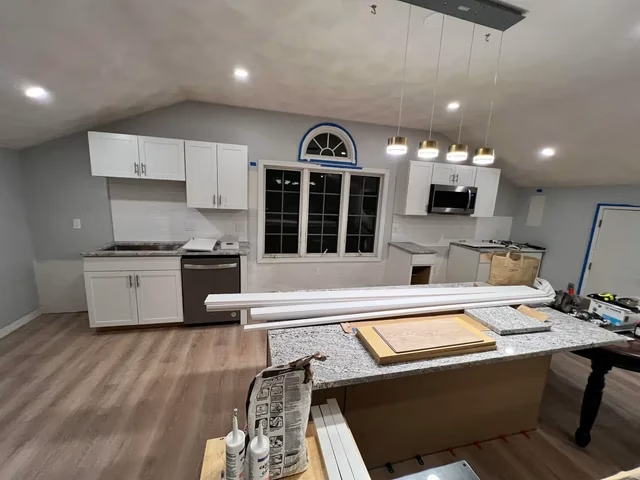
Kitchen flooring is almost always part of a larger project. The timing and sequence matter as much as the material.
During a remodel, flooring for remodels is sequenced around cabinet installation, plumbing, and appliance hookups. If the kitchen is being updated with a new backsplash, backsplash tile installation is often handled in the same project.
For new construction, new construction flooring goes in after the cabinets are set and before final appliance installation. If the project involves multiple trades or structural changes, our flooring contractor page explains the broader scope.
Areas We Serve
We provide kitchen flooring installation across the Wiregrass region. The links below go to location pages with details for each community.
For broader residential projects, see our residential flooring services page. If you are outside these communities, contact us to confirm whether your location is within our service area.
Frequently Asked Questions
What is the best flooring for a kitchen?
Porcelain tile and luxury vinyl are the most practical choices. Porcelain is the most durable and water-resistant when installed with a membrane beneath it. LVP and LVT are waterproof, warmer underfoot, and easier on dropped dishes. Both work; the right one depends on how much the kitchen is used and how much maintenance is acceptable.
Does kitchen flooring go under the cabinets?
In most kitchens, no. Cabinets sit on the subfloor and the flooring butts up to the cabinet base. The flooring goes under the appliances because appliances are removed for service and replacement. Some renovations do go wall to wall under the cabinets, but that is a design choice and costs more.
What about leaks under the dishwasher or sink?
Those are the most common kitchen leak sources. The area around the sink and dishwasher should be sealed, and any soft or damaged subfloor has to be repaired before new flooring goes down. Subfloor repair handles this.
Is tile too hard for a kitchen?
Tile is hard underfoot, and standing on it for long periods is less comfortable than vinyl or wood. An anti-fatigue mat helps. Many homeowners choose tile anyway for durability and water resistance.
Can LVP handle a kitchen?
Yes. LVP is waterproof on the surface, handles spills and drops well, and is warmer and softer underfoot than tile. The edges and seams have to be sealed, and the substrate has to be sound.
Can hardwood go in a kitchen?
Engineered hardwood is possible if the homeowner accepts the risk of appliance leaks. Solid hardwood is not recommended. Many homeowners choose a wood-look LVP instead for the same appearance with better moisture tolerance.
Can a kitchen floor be repaired instead of replaced?
Sometimes. Individual tiles or planks can be replaced if the damage is localized and matching material is available. If the substrate has failed or water damage is widespread, floor replacement is the practical answer.
Do you install kitchen flooring during remodels or new construction?
Yes. Flooring for remodels is sequenced around cabinet and plumbing work, and new construction flooring is coordinated with the builder’s schedule.