
Tile Shower Installation

Tile Shower Installation in Dothan, AL
A tile shower is the only floor in a house that is designed to get wet on purpose. Every other floor is protected by keeping water away from it. A shower is protected by managing the water that reaches it — routing it to the drain, sealing it out of the framing, and giving it a path to escape if it gets behind the tile.
That is why the tile is the least important part of the system. The waterproofing behind it, the slope beneath it, and the drain connection at the center decide whether the shower lasts or rots the framing behind the wall. We install tile showers across the Wiregrass with the waterproofing treated as the main event. If you are planning a shower project, you can request a tile shower estimate and we will assess the space before recommending anything.
Why Tile and Grout Are Not Waterproof
Homeowners often assume the tile keeps the water out. It does not.
Grout is porous. Water passes through grout joints and reaches the setting bed behind the tile. A shower can look perfect for years while moisture is accumulating behind the wall .
Cement board is water-resistant, not waterproof. Backer board tolerates moisture better than drywall, but it does not stop water from passing through it. The waterproofing layer has to go on top of the backer board or behind it, depending on the system .
The waterproof layer is the system. A shower is waterproof because a continuous membrane — liquid-applied, sheet-applied, or a traditional pan liner — sits between the tile and the framing. That membrane has to be continuous at every corner, seam, and penetration .
Grout is not a substitute. Even epoxy grout does not replace the waterproofing layer. It reduces staining and makes cleaning easier, but water still reaches the membrane behind it.
The Two Shower Waterproofing Systems We Install
There are two established ways to build a waterproof shower, and both work when they are built correctly. The right one depends on the shower and the substrate.
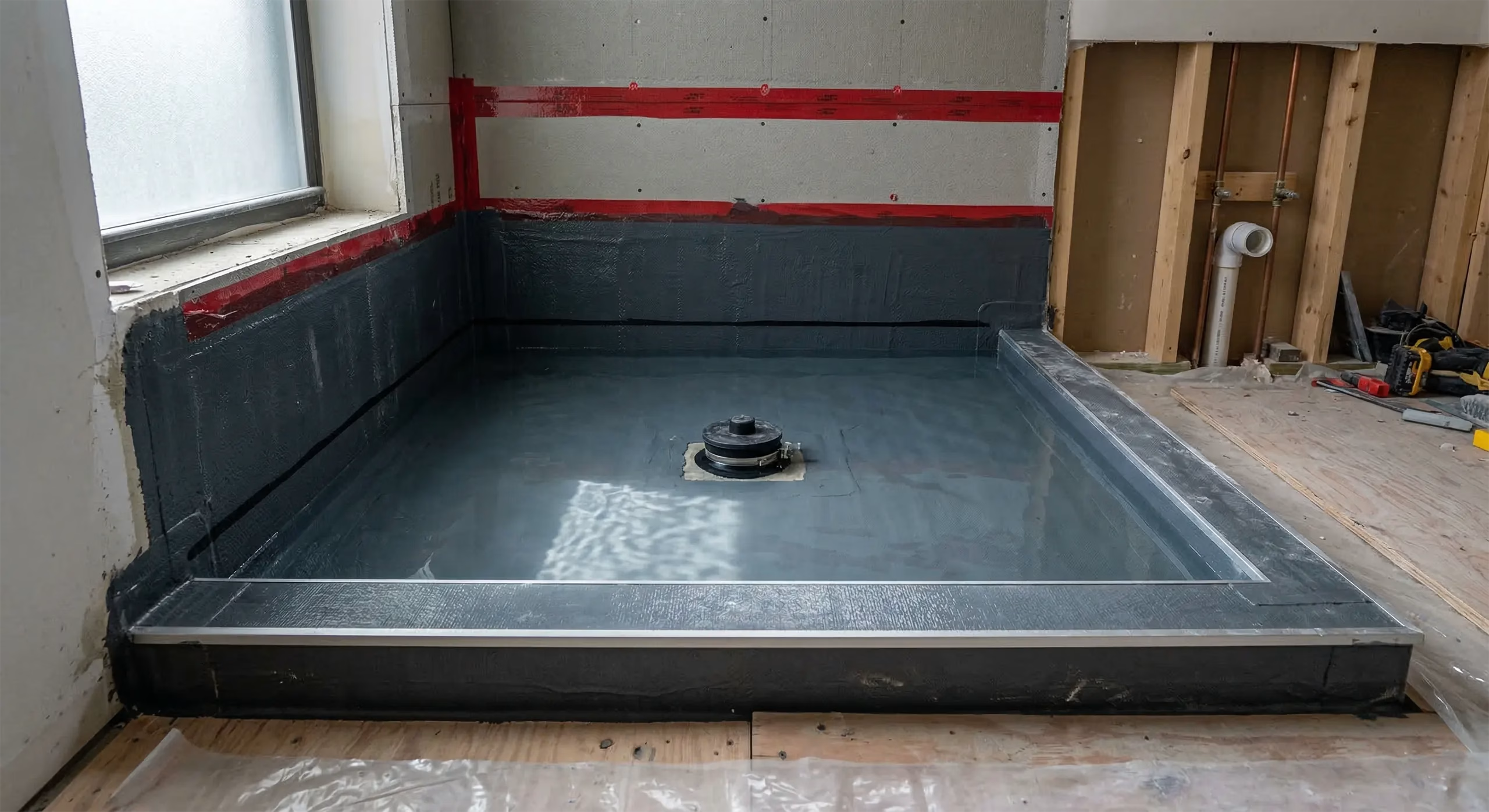
Surface-applied membrane systems. A waterproof membrane is applied directly over the sloped mortar bed and the backer board on the walls, and it ties into the drain through an integrated bonding flange. Tile goes directly on top of the membrane. Water never reaches the mortar bed or the framing, so the assembly dries out between uses . This is the method most commonly used in new construction and renovations today because it eliminates the moisture retention that traditional systems can have.
Traditional pan liner systems. A pre-sloped mortar bed goes down first, then a PVC or CPE liner is clamped into a three-piece drain. A second mortar bed goes over the liner, and tile goes on top. Water that gets through the tile and mortar drains through weep holes at the drain . This system is outlined in the TCNA Handbook as method B-415, and it works well when the pre-slope is correct, the liner is not punctured, and the weep holes stay clear .
What both systems share. The floor has to slope to the drain at roughly a quarter inch per foot. The waterproofing has to be continuous. The drain connection has to be sealed. And the assembly should be flood-tested before tile goes on .
The Critical Details That Decide Whether a Shower Lasts
Most shower failures happen at a small number of specific points. A good installer plans for them before the first tile is set.
The drain connection. This is the single most common failure point. The membrane or liner has to seal to the drain body without gaps or folds. Integrated bonding flanges and clamping rings both work, but only when installed exactly as the manufacturer specifies .
Corners and changes of plane. Inside corners, outside corners, and the seam where the floor meets the wall are where water finds its way behind the tile. These points get reinforcing fabric, sealant, or pre-formed corners depending on the membrane system .
The curb. The curb is where a shower pan liner is most often punctured by fasteners. A traditional liner has to wrap the curb without nails going through the part that holds water. Surface-applied systems handle the curb differently but still require careful detailing .
Niche and bench penetrations. A recessed niche or a bench creates openings in the waterproofing. Each one has to be sealed as part of the membrane system, not cut in afterward .
The valve and shower head openings. The plumbing wall has holes cut for the valve and the shower arm. Those openings have to be sealed around the fixture so water cannot travel into the wall cavity .
The flood test. Before any tile goes on, the pan should hold water for a period specified by local code or the membrane manufacturer. A flood test catches a failed membrane while it is still fixable .
Why Shower Failures Are Common in Alabama Homes
Local conditions make shower waterproofing more important, not less.
Humidity slows drying. A shower that stays damp between uses grows mold faster in a humid climate. A surface-applied membrane system reduces moisture retention in the assembly because water does not have to travel through a mortar bed to reach the drain .
Older homes have pier-and-beam floors. A shower pan on a wood subfloor needs a solid, flat substrate. If the subfloor flexes, the mortar bed and the tile above it can crack. Subfloor repair and floor leveling are sometimes part of the shower scope in older Wiregrass homes.
Slab foundations wick moisture. A shower on a concrete slab needs a substrate that is dry and stable before the pan goes down. Moisture testing is part of the assessment.
Remodels uncover old failures. When an old shower comes out, the framing behind it often shows rot or mold from years of slow leaks. That damage has to be repaired before the new shower goes in. Floor repair and framing repair are often part of the project.
How a Tile Shower Project Runs
1. Assessment. We look at the existing shower or the space where it will go, check the substrate, and discuss the waterproofing system. If the shower is part of a bathroom remodel, bathroom flooring installation is often handled in the same project.
2. Demolition. Old tile, backer board, and pan come out. The framing and subfloor are exposed and inspected for damage.
3. Framing and substrate repair. Rotted framing, damaged subfloor, and out-of-plumb walls are corrected before any waterproofing goes down.
4. Pan and drain. The sloped pan goes down and the drain is set. The slope is checked at roughly a quarter inch per foot toward the drain.
5. Waterproofing. The membrane system goes on — surface-applied or traditional liner — with reinforcing at corners, seams, and the drain connection.
6. Flood test. The pan holds water for the specified period to confirm the waterproofing is intact.
7. Tile installation. Wall tile and floor tile go on. The layout is planned around the drain, the niche, and the plumbing fixtures before any mortar is mixed.
8. Grout and sealant. Grout goes on after the mortar cures. Flexible sealant goes at changes of plane and at the joints where tile meets fixtures.
9. Walkthrough. We check slope, drainage, grout, and sealant before final payment.
Shower Tile Choices That Work
The tile on the shower floor and the tile on the walls are different decisions.
Floor tile. Smaller mosaic tile is common on shower floors because it follows the slope to the drain more easily than large-format tile and the extra grout lines add grip underfoot . Polished or slick tile should not go on the floor.
Wall tile. Porcelain is the standard choice because it absorbs very little water. Ceramic can work on walls, but check the manufacturer’s rating before using it in a wet area .
Grout. Epoxy grout resists staining and makes cleaning easier, but it does not replace the waterproofing. Cement grout with a sealer is also common. The grout choice affects maintenance more than waterproofing.
Sealant at changes of plane. Grout cracks where the wall meets the floor or where two walls meet. Flexible sealant goes in those joints instead .
Repair and Replacement for Existing Showers
Shower failures often show up as stains on the ceiling below, loose tile, or a musty smell that does not go away. When they do, the fix depends on what failed.
Regrouting and resealing. If the waterproofing is intact and the problem is cosmetic, regrouting and replacing the sealant at changes of plane can extend the life of the shower. This is maintenance, not a repair.
Tile replacement. If a few tiles are loose or cracked, they can sometimes be replaced. If the crack came from movement behind the tile, replacing the tile without fixing the substrate produces the same crack again.
Full shower rebuild. When the waterproofing has failed, the pan is leaking, or the framing behind the wall has rot, the shower has to come out and be rebuilt. Floor replacement covers the removal scope when the shower floor is part of a larger bathroom replacement.
Where tile is not the answer. If the shower is failing repeatedly because of structural movement or moisture that cannot be controlled, a prefabricated shower unit may be the more practical choice. Waterproof flooring installation covers the products that handle moisture best in the rest of the bathroom.
Areas We Serve
We provide tile shower installation across the Wiregrass region. The links below go to location pages with details for each community.
For broader bathroom projects, see our bathroom flooring installation page. If you are outside these communities, contact us to confirm whether your location is within our service area.
Frequently Asked Questions
Why is tile shower installation different from tiling a floor?
A shower is designed to get wet. Water passes through grout and reaches the layer behind the tile. That layer has to be waterproof and continuous, and the floor has to slope to the drain. A floor tile installation does not have to manage water the same way .
Is cement board waterproof?
No. Cement board is water-resistant, but water passes through it. The waterproofing layer goes on top of the backer board or behind it, depending on the system. Cement board alone is not a waterproof shower .
What is a flood test and why does it matter?
A flood test fills the shower pan with water before tile goes on and holds it for a specified period. If the pan leaks, the test catches it while the waterproofing is still accessible. Skipping the flood test means finding out about a leak after the shower is finished .
How long does a tile shower take?
A shower build takes longer than a floor tile installation because of the layers involved. Demolition, substrate repair, pan construction, waterproofing, flood testing, tile, and grout each take time. Cure times between steps affect the schedule. The estimate should give a realistic timeline.
Can I tile over an existing shower?
Sometimes, but only if the existing waterproofing and substrate are sound. In most cases, the old tile and backer have to come out so the waterproofing can be inspected and replaced. Tiling over a failed shower seals the problem in.
What causes showers to leak?
The most common causes are a failed drain connection, a punctured pan liner, a missing pre-slope, unsealed corners or niches, and movement at changes of plane. Most leaks start at a small number of specific points, not in the middle of the wall .
Do you install shower niches and benches?
Yes. Niches and benches are part of the shower scope. They require careful waterproofing because each one creates an opening in the membrane that has to be sealed.
Do you handle shower installation during bathroom remodels?
Yes. Bathroom flooring installation and shower work are often part of the same project. Flooring for remodels is sequenced so the shower and floor work happen in the right order.