
Commercial Flooring Services

Commercial Flooring Services in Dothan, AL
A commercial floor is judged differently than a residential one. Nobody walks into a store and admires the tile. They judge whether the space looks maintained, whether it is safe, and whether anything about it seems like it might cost the owner money later. Commercial flooring has to hold up under traffic that no home ever sees, and it has to be installed without shutting the business down for a week.
We work with business owners, property managers, and facility managers across the Wiregrass on flooring projects that are planned around operations rather than around a contractor’s convenience. If you are evaluating options for a space, you can request a commercial flooring estimate and we will assess the site before quoting.
What Makes Commercial Flooring Different
Residential and commercial flooring use some of the same materials, but the decision criteria are not the same.
Traffic volume. A retail entrance or a clinic hallway takes more foot traffic in a month than most homes see in a decade. That changes which wear layers, finishes, and materials are appropriate.
Downtime cost. Every day a business is closed for installation is a day of lost revenue. Scheduling, phasing, and overnight work are part of commercial planning in a way they rarely are for homes.
Code and safety requirements. Commercial spaces have slip resistance, fire rating, and accessibility considerations that residential projects do not. We flag these during assessment so they are addressed through the right material and floor leveling rather than discovered at inspection.
Maintenance expectations. A commercial floor has to be cleanable by staff or a janitorial service, not just by the owner on weekends. Luxury vinyl plank flooring and tile flooring installation are common for this reason.
Flooring by Commercial Space Type
Different commercial spaces put different demands on the floor. The right choice for an office is not the right choice for a restaurant kitchen.
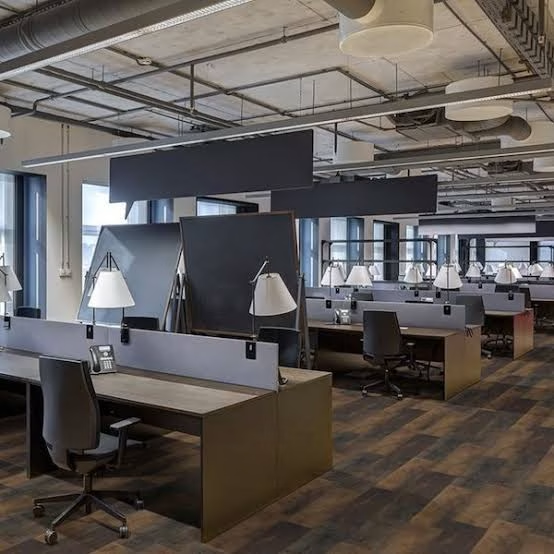
Offices and professional suites. Appearance and quiet matter. Luxury vinyl plank flooring or carpet installation in low-traffic areas, with tile flooring installation in restrooms and break rooms.
Retail spaces. Visibility, durability, and cleanability. Luxury vinyl plank flooring handles spills and constant foot traffic well. Tile flooring installation is common at entrances where weather and grit come in.
Restaurants and food service. Moisture, grease, and sanitation requirements. Waterproof flooring installation in kitchens and prep areas, and tile flooring installation where washdown is routine.
Clinics and medical offices. Hygiene and seamless surfaces. Luxury vinyl plank flooring and waterproof flooring installation are common because seams and grout lines trap debris.
Warehouses and back-of-house. Utility over appearance. Epoxy floor coatings and garage floor coatings provide a hard, cleanable surface that handles equipment traffic.
Rental and multi-unit properties. Turnover speed and durability. Luxury vinyl plank flooring is the standard choice because it survives tenant changes and cleans up quickly between leases.
Planning the Project Around Your Operating Hours
The most common concern from business owners is not the material. It is whether the work will interfere with customers or staff.
Phased installation. Large spaces are often completed in sections so part of the business stays open while the other part is being worked on. This requires planning the sequence around customer flow, not just square footage.
After-hours and weekend scheduling. Many commercial projects are installed outside operating hours to avoid disruption. This is discussed during the estimate and factored into the schedule.
Material staging. Commercial projects need somewhere for materials to sit without blocking access. We plan staging before the first day on site rather than improvising.
Coordination with other trades. If the project is part of a larger renovation, flooring for remodels is sequenced around electrical, HVAC, and finish work. For ground-up builds, new construction flooring is coordinated with the general contractor’s timeline.
Clear scope in writing. The estimate states what is included, what is excluded, and what would be billed separately if discovered during removal. Business owners should not be learning scope details mid-project.
Subfloor and Site Conditions in Commercial Buildings
Commercial buildings have their own structural realities, and the subfloor is usually the deciding factor in whether an installation succeeds.
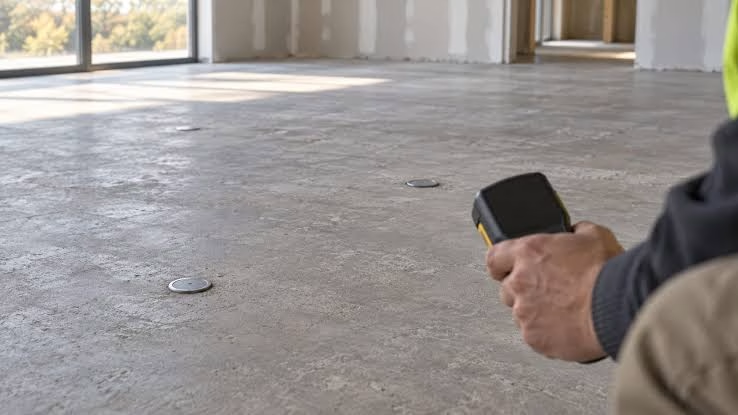
Slab moisture. Many commercial spaces sit on grade or slab-on-grade construction. Moisture vapor transmission through the slab can ruin adhesives and flooring if it is not addressed. We test for it and specify the appropriate moisture barrier or waterproof flooring installation where needed.
Existing flooring layers. Commercial spaces often accumulate flooring over time — carpet over tile over slab, for example. Part of the assessment is determining how many layers exist and whether flooring removal needs to go to the original substrate.
Levelness and load. Uneven slabs cause premature wear and trip hazards. Floor leveling is common in older commercial buildings, and subfloor repair is sometimes needed where previous installations failed.
Equipment and fixture coordination. Commercial restrooms, kitchens, and utility areas have plumbing, drains, and fixtures that affect flooring layout. Tile shower installation and backsplash tile installation in commercial restrooms and kitchens are planned around those fixtures.
Materials That Hold Up Under Commercial Use
The material list overlaps with residential, but the selection logic is different. Durability and maintenance cost matter more than appearance trends.
Luxury vinyl plank. Luxury vinyl plank flooring is the most common commercial choice because it handles moisture, cleans easily, and can be replaced plank by plank if a section is damaged.
Tile. Tile flooring installation is standard in restrooms, kitchens, and entrances. It is durable and cleanable but requires a stable substrate to avoid cracking.
Carpet tile and broadloom. Carpet installation is still used in offices and low-traffic areas where sound absorption matters.
Epoxy and coatings. Epoxy floor coatings and garage floor coatings are used in warehouses, garages, and back-of-house areas where a seamless, hard surface is required.
Engineered and hardwood. Engineered hardwood flooring and hardwood floor installation are sometimes specified for professional offices and client-facing spaces where appearance matters. They require climate control to perform.
Refinishing and repair. Existing hardwood in older commercial buildings can sometimes be saved with hardwood floor refinishing rather than replaced. Localized damage is handled through floor repair.
Areas We Serve
We provide commercial flooring services across the Wiregrass region. The links below go to location-specific pages with details for businesses in each community.
For residential properties, see our residential flooring services page. If you are outside these communities, contact us to confirm whether your location is within our service area.
Frequently Asked Questions
Can commercial flooring be installed without closing the business?
In many cases, yes. Phased installation and after-hours scheduling are planned during the estimate so that part of the space stays operational while work proceeds elsewhere. The feasibility depends on the layout and the scope.
What flooring is best for a retail space?
Durability and cleanability usually point to luxury vinyl plank flooring, with tile flooring installation at entrances where weather and grit come in.
Do you test for slab moisture before installation?
Yes. Slab moisture is a common cause of adhesive and flooring failure in commercial buildings. It is checked during the site assessment, and the appropriate moisture barrier or waterproof flooring installation is specified if needed.
Can you work around our business hours?
Yes. After-hours and weekend scheduling are discussed during the estimate. The exact arrangement depends on the scope and the building’s access rules.
Do you handle flooring for restaurants and kitchens?
Yes. Waterproof flooring installation and tile flooring installation are common in food service areas where moisture and sanitation requirements are stricter.
Can you replace only part of a commercial floor?
Often, yes. Localized damage can sometimes be addressed with floor repair rather than full floor replacement. The assessment visit determines whether a partial repair is practical.
Do you work with property managers on multi-unit projects?
Yes. Multi-unit and rental properties are a common commercial scope. Luxury vinyl plank flooring is usually the standard choice because it handles turnover and cleaning well.
How do I get a commercial estimate?
Reach out through our contact page with the space type, approximate square footage, and any scheduling constraints. We will schedule a site assessment before quoting.