
Engineered Hardwood Flooring

Engineered Hardwood Flooring in Dothan, AL
Engineered hardwood is sold as the stable alternative to solid wood. That is true, but stability is relative. The product is a stack of layers glued together — a real wood top layer over a plywood-style core — and those layers move at different rates when humidity changes. When the top layer shrinks and the core does not, the plank can crack down the middle, delaminate at the edge, or cup in ways solid wood rarely does .
Understanding that layered construction explains both what engineered wood can do and where it fails. We install engineered hardwood across the Wiregrass with the core and the glue treated as the real subject. If you are planning a project, you can request an engineered hardwood estimate and we will assess the space before recommending a product.
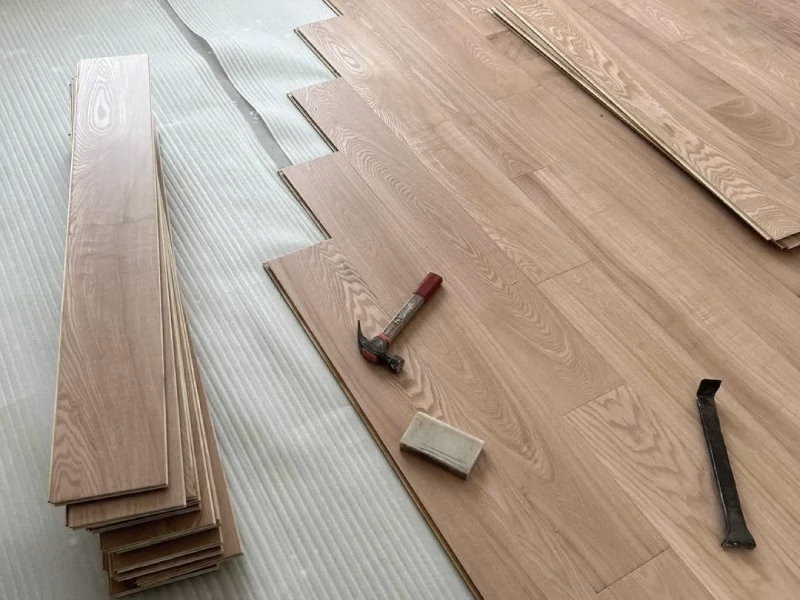
What the Layers Actually Do (and Where They Fail)
The construction is the whole story with engineered wood. Skip this and the rest is guesswork.
The top layer (lamella). This is real wood, usually thick enough to sand and refinish once or twice depending on the product. It looks and feels like solid hardwood because it is hardwood. A thicker lamella costs more but allows more refinishing later .
The core. Below the lamella sit layers of plywood-style veneers or solid wood glued crosswise. The cross-grain construction is what makes engineered wood more dimensionally stable than solid wood. The layers resist moisture movement in different directions, so the plank as a whole moves less .
The glue is the weak point. The layers are bonded with adhesive. When the top layer shrinks in dry conditions and the core does not, stress builds at that glue line. Over time, the plank can crack lengthwise, delaminate, or show edges lifting. Failures are most common with wide planks and glue-down installations in homes with poorly controlled humidity .
Width changes the risk. Wider boards have more total shrinkage in the top layer, which puts more stress on the glue bond. Narrower planks, generally under five inches, fail far less often in real-world conditions . In the Wiregrass, where humidity swings through the year, narrower planks are the safer choice unless the home has tight climate control.
Why Engineered Wood Fails in Alabama Homes
Alabama humidity is not a background detail. It is the main driver of engineered wood performance.
Summer expansion and winter contraction. Wiregrass summers push indoor humidity high, and winter heating dries the air. The top layer of engineered wood moves with those swings. The core moves less. The glue line between them absorbs the difference, and repeated cycles stress that bond .
Glue-down installations are the most vulnerable. A glued-down floor restrains the bottom of the plank more than a floating or nailed floor does. That restraint can create a moisture difference between the top and bottom layers, which accelerates delamination risk . In a humid climate, the installation method matters as much as the product.
Slab moisture from below. Engineered wood is more stable than solid, but it is not waterproof. Concrete slabs pull moisture up from the ground, and that moisture reaches the core from below. Without testing and a barrier, the floor can fail from the bottom up. Our waterproof flooring installation page covers rooms where moisture risk is too high for wood.
Homes without steady climate control. Guest rooms, closed-off spaces, and rooms above garages swing in humidity more than main living areas. Engineered wood in those rooms moves more, and the glue line takes more stress. A humidifier or dehumidifier in the home makes a measurable difference.
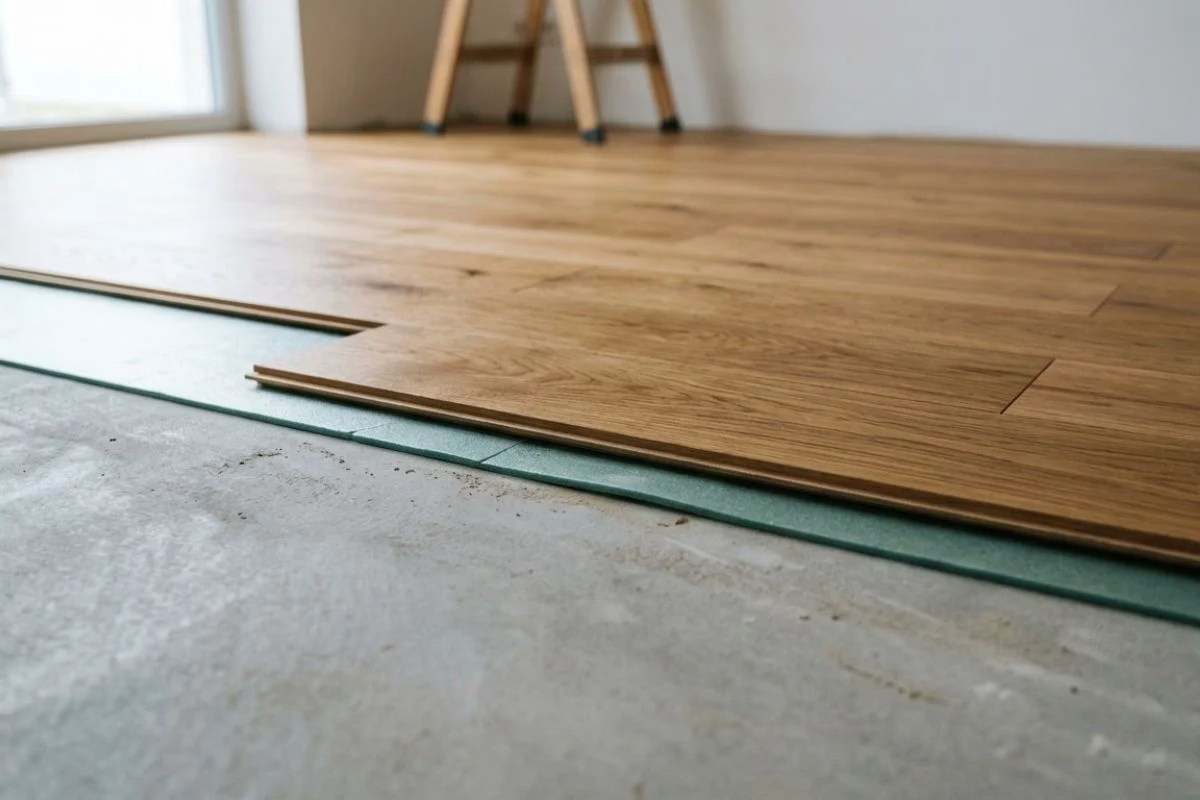
Subfloor Prep: Where Engineered Wood Projects Are Decided
Engineered wood forgives some things. It does not forgive a bad subfloor. The industry tolerance for flatness is 3/16 inch over a 10-foot span, and floating floors are especially sensitive to variation outside that range .
Flatness. A subfloor that is out of flat causes the planks to flex, which stresses the click joints or the glue line. Floor leveling corrects the surface before installation. Self-leveler is cheaper than a tear-out later .
Moisture testing. On concrete slabs, proper testing uses ASTM methods rather than a spot check. Engineered wood is more stable than solid, but it is not immune to elevated moisture or vapor drive . We test and document before installation.
Residue and bond breakers. Old adhesive, paint overspray, and construction dust prevent glue from bonding. A glue-down floor over a dirty slab will fail at the bond line regardless of how good the adhesive is. Surface preparation is not optional .
Old flooring removal. In many cases the existing floor has to come out first. Flooring removal and disposal are part of the scope when that step is required.
Installation Methods and What Each One Means
Engineered wood installs in three ways. The method changes how the floor feels, sounds, and holds up.
Floating (click-lock). Planks click together and rest on the subfloor without adhesive or fasteners. This is the fastest method and the most forgiving over concrete. It can feel slightly hollow underfoot and transmits more sound than glued or nailed floors. Floating works well over slabs and radiant heat .
Glue-down. Planks are adhered directly to the subfloor. This creates a solid, quiet floor and works over concrete. It costs more in labor and adhesive, and it is harder to remove later. Glue-down is also the method most associated with engineered wood failures in dry conditions because the glue restrains the bottom of the plank .
Nail or staple-down. Fasteners drive through the tongue of each plank into a wood subfloor. This requires a wood subfloor and does not work over concrete. It creates a traditional, solid feel and is common in pier-and-beam homes .
Acclimation. Engineered wood needs less acclimation time than solid wood, but it still needs to adjust to the room. Some manufacturers specify shorter acclimation or none, but in a humid climate like Alabama, letting the planks settle in the space before installation reduces movement afterward .
Rooms Where Engineered Wood Fits
Engineered wood is more versatile than solid wood, but it is not universal.
Living rooms and bedrooms. The strongest fit. Climate control keeps humidity stable, and the wood look is the goal. Hardwood floor installation in engineered planks works well in these rooms.
Kitchens. Possible with caution. Engineered wood handles humidity better than solid wood, but appliance leaks and sink overflows are the real risk. Kitchen flooring installation in engineered wood works if spills are handled promptly.
Basements and slab rooms. Engineered wood is the wood option for below-grade and slab spaces because of its dimensional stability. However, slab moisture testing is mandatory. If readings are high, a barrier is needed, and luxury vinyl plank flooring may be the safer choice.
Bathrooms. Not recommended. Steam and splash are too much for wood, even engineered wood. Bathroom flooring installation should default to tile or vinyl.
Homes with pets. Engineered wood scratches. It can be refinished once or twice, but refinishing is not free. Luxury vinyl plank flooring handles claws better in busy homes.
Repair, Refinish, or Replace Engineered Wood
Engineered wood is not the same as solid wood when it comes to repair options. The lamella thickness sets the limit.
Refinishing. The top layer can be sanded and refinished, but only if the lamella is thick enough. Thicker veneers allow one or two refinishing cycles. Thin veneers may allow none . Hardwood floor refinishing applies here, but the assessment determines whether the veneer is thick enough to sand.
Localized repair. Damaged planks can sometimes be replaced if matching material is available. Floor repair handles this for small areas. If the damage came from moisture, the source has to be addressed or the new plank will fail the same way.
Full replacement. When the core has swelled, the glue line has failed across the floor, or the planks are too thin to refinish, floor replacement is the practical answer.
Delamination repair. Small areas of delamination can sometimes be glued and clamped, but this is a temporary fix rather than a permanent one. Widespread delamination means replacement .
Engineered Wood in Remodels and New Builds
Engineered wood is often part of a larger project. Timing and sequencing matter.
During a renovation, flooring for remodels is sequenced around cabinet, paint, and trim work so the floor is not damaged by other trades. For new construction, new construction flooring goes in before final finishes. If the project involves structural changes or multiple trades, our flooring contractor page explains the broader scope.
Areas We Serve
We provide engineered hardwood flooring across the Wiregrass region. The links below go to location pages with details for each community.
For broader residential projects, see our residential flooring services page. If you are outside these communities, contact us to confirm whether your location is within our service area.
Frequently Asked Questions
Is engineered hardwood real wood?
Yes. The top layer is real hardwood. The core is plywood-style veneers or solid wood glued crosswise. It looks and feels like wood because the surface is wood .
Why does engineered hardwood crack or delaminate?
The top layer and the core move at different rates when humidity changes. The glue between them absorbs that stress, and over time it can fail. Wide planks and glue-down installations in poorly controlled humidity are the highest-risk combinations .
Is engineered wood better than solid wood in Alabama?
It is more dimensionally stable, which helps in humid climates. But it is not immune to humidity. Subfloor moisture testing and climate control still matter. In slab homes, engineered is the wood option that makes sense .
How flat does the subfloor need to be?
Within 3/16 inch over a 10-foot span. Floating floors are especially sensitive to variation outside that range . Floor leveling corrects the surface before installation.
Can engineered hardwood be refinished?
Sometimes, if the top layer is thick enough. Thicker veneers allow one or two refinishing cycles. Thin veneers may allow none . The assessment visit determines whether your floor can be sanded.
Does engineered wood need to acclimate?
It needs less time than solid wood, but it still needs to adjust to the room. In Alabama humidity, letting the planks settle before installation reduces movement afterward .
Can engineered wood go over concrete?
Yes, with moisture testing and a barrier if readings call for one. Floating and glue-down are the common methods over concrete. Nail-down requires a wood subfloor .
Do you install engineered wood in kitchens or bathrooms?
Kitchens are possible with caution and prompt spill cleanup. Bathrooms are not recommended. Waterproof flooring installation is the safer choice in wet rooms.
Do you install engineered wood during remodels or new construction?
Yes. Flooring for remodels is sequenced around other trades, and new construction flooring is coordinated with the builder’s schedule.