
Floor Repair Services

Floor Repair Services in Dothan, AL
A damaged floor is not one problem. It is a different problem depending on what the floor is made of. A soft spot underfoot means something entirely different on hardwood than it does on tile or carpet. The same symptom that can be patched on one material can signal a failing substrate on another.
That is why repair begins with identifying the material and then reading what the damage pattern says about the cause. We repair every flooring material we install, and we diagnose before we touch anything. If you have a damaged area and want to know whether it can be repaired, you can request a floor repair estimate and we will assess the floor before quoting.
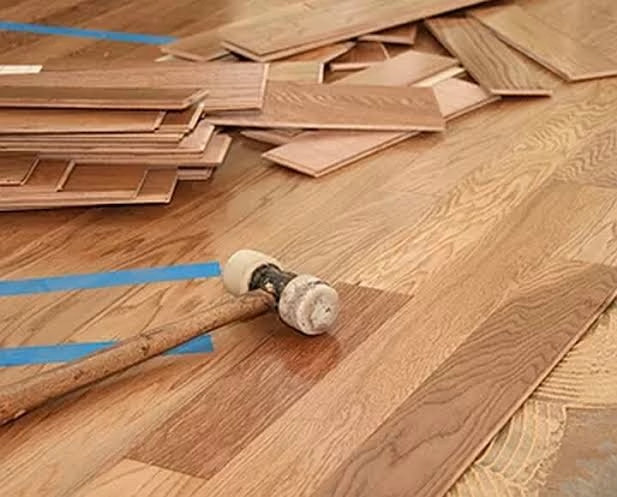
The Same Symptom on Five Different Materials
This is the core of floor repair. The problem you see looks similar across materials, but the cause and the fix are different every time.
Soft or spongy spot on hardwood. Usually a subfloor or joist problem underneath. The wood above it may be sound, or it may be rotting from moisture rising from below. Repair means hardwood floor repair, and it often involves subfloor repair as well.
Soft spot on tile. This is a serious sign. Tile is rigid, and a soft spot under tile usually means the substrate has failed, the mortar has debonded, or water has gotten underneath. Individual tiles may sound hollow when tapped. Repair means removing tile, fixing the substrate, and resetting. Tile flooring installation covers the full scope.
Soft spot on vinyl or LVP. Usually a subfloor problem showing through the thin material. The vinyl itself may be fine while the surface beneath it has failed. Luxury vinyl plank flooring sits on top of whatever is underneath, and a soft subfloor will eventually telegraph through.
Soft spot on laminate. Laminate has a wood-fiber core. A soft spot usually means the core has absorbed moisture and swelled, or the subfloor beneath has failed. Laminate cannot be patched the way solid wood can. Laminate flooring installation explains the limits of the material.
Soft spot on carpet. Almost always a subfloor problem. The carpet and pad hide what is happening underneath, and by the time the soft spot is noticeable, the subfloor may have been damaged for a while. Carpet installation covers the pad and subfloor work.
Repair by Material: What Each One Allows
Each flooring material has its own repair vocabulary. Some can be patched in place; others have to be replaced in sections or entirely.
Hardwood. The most repairable material. Boards can be re-secured, replaced individually, sanded, or refinished. Hardwood floor repair and hardwood floor refinishing cover most problems. The limit is wood thickness — after several sandings, there may not be enough left.
Tile. Repairable if matching tile is available and the substrate beneath is sound. Cracked or loose tiles can be removed and reset. If the cracking is widespread, the substrate has failed and section or full replacement is the practical answer. Tile flooring installation covers the full scope.
Vinyl and LVP. Planks can often be replaced individually if the damage is localized. Sheet vinyl is harder to repair invisibly. The subfloor beneath has to be sound, or the replacement will fail the same way. Vinyl flooring installation explains the products.
Laminate. Individual planks can sometimes be replaced, but the wood-fiber core limits what is possible. Water-swollen planks cannot be repaired. Laminate flooring installation explains the limits.
Carpet. Localized damage can sometimes be patched with matching material. Loose carpet can sometimes be restretched. Water damage that reached the pad usually means replacement of that section. Carpet installation covers the full scope.
Engineered hardwood. Sometimes repairable plank by plank. The layered core limits refinishing. Engineered hardwood flooring explains the construction.
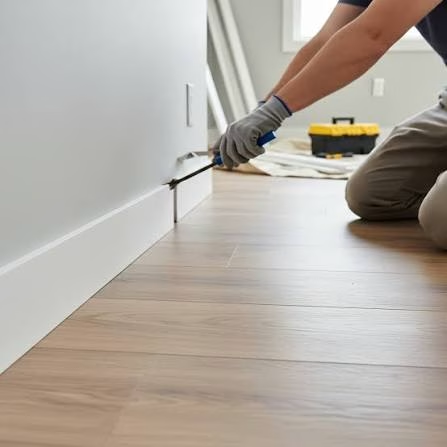
The Repair Questions We Ask First
Before recommending any repair, we work through the same set of questions. The answers determine whether a small fix will hold or whether the problem is larger.
What is the material? Solid wood, engineered wood, tile, vinyl, laminate, or carpet. Each one has different repair options.
Where is the damage? A single spot, a line, a circle, or a broad area. The pattern usually points to the cause.
Is the subfloor involved? If the floor feels soft, bouncy, or uneven, the subfloor or substrate has to be checked before any surface repair.
Is moisture present? We check for active leaks, slab moisture, and crawl space humidity. Repairing a floor over an active moisture source will fail again. Subfloor repair and floor leveling often come into play here.
Is the damage cosmetic or structural? A scratch is cosmetic. A soft spot is structural. The two require completely different responses.
Has this spot been repaired before? If the same area keeps failing, the underlying cause has not been found. Repairing it again produces the same result.
When Repair Becomes Replacement
Repair is not always the cheaper answer once the full scope is known. In some cases, a repair that holds for a year costs more over time than a replacement that lasts.
Widespread damage. When damage covers most of a room or crosses multiple rooms, floor replacement is usually more economical than patching section by section.
Failed substrate. If the subfloor or slab has failed across an area, surface repair will not solve it. The substrate has to be corrected, and that often means removing the floor above it.
Material no longer available. Matching older tile, laminate, or carpet can be impossible. If a patch would be visible and the homeowner wants a uniform surface, replacement may be the better answer.
Moisture that keeps returning. If a floor has been repaired twice for the same moisture problem, the source has never been fully addressed. Waterproof flooring installation in the affected rooms may be the more practical long-term choice.
Flooring at the end of its life. Old carpet, worn vinyl, and thin laminate reach a point where repairs add up faster than replacement. Floor replacement services covers the full tear-out and install scope.
Why Local Conditions Drive Repair Patterns
The same local conditions that cause floor damage also shape what repairs look like. In the Wiregrass, certain repair jobs come up repeatedly.
Humidity-related movement. Wood and laminate move with seasonal humidity. Cupping, gapping, and squeaks are common in @fname@ homes. Wood repairs often start with fixing the moisture source, not the boards. Hardwood floor repair covers this.
Crawl space moisture. Many local homes sit on pier-and-beam foundations. Moisture from the crawl space reaches the subfloor and then the flooring above. Repair without addressing the crawl space fails. Subfloor repair is often part of the scope.
Slab moisture on newer homes. Concrete pulls moisture up from the ground. Tile, vinyl, and laminate all fail differently when the slab is wet. Our waterproof flooring installation page covers the products that handle slab moisture best.
Plumbing leaks. Toilets, sinks, and appliances leak. Damage around fixtures is common across every material type. Finding the leak is the first step in any repair.
Pet damage. Common in homes and rentals. Carpet, wood, and laminate all show pet damage differently. Repair options vary by material.
How a Repair Project Runs
1. Assessment. We look at the damage, identify the material, check the subfloor or substrate if needed, and look for moisture. The assessment determines whether repair or replacement is the right answer.
2. Written estimate. The quote separates diagnosis, labor, materials, and any subfloor work so each part is visible.
3. Source correction. If moisture or substrate failure is the cause, we tell you what has to be fixed before the surface repair. A repair over an active problem fails.
4. Repair. The fix depends on the material and the cause — board replacement, tile reset, plank replacement, patch, restretch, or substrate repair. Floor repair covers the local scope, and subfloor repair handles what is underneath.
5. Finishing. If the repair involves visible material, we finish or blend the area to match the surrounding floor as closely as possible. Exact matching is not always possible, and we say so upfront.
6. Walkthrough. We walk the repaired area with you and check that the fix solved the problem and that the finish blends acceptably.
Repair During Remodels and New Builds
Repair is often part of a larger project. Older homes being renovated may need repairs before refinishing or replacement. If the project is part of a flooring for remodels scope, the repair work is sequenced around other trades.
For new construction, repairs are rare unless something went wrong during the build. New construction flooring is usually a different scope. If the project involves structural changes or multiple trades, our flooring contractor page explains the broader scope.
Areas We Serve
We provide floor repair services across the Wiregrass region. The links below go to location pages with details for each community.
For broader residential projects, see our residential flooring services page. If you are outside these communities, contact us to confirm whether your location is within our service area.
Frequently Asked Questions
What kinds of flooring do you repair?
All the materials we install: solid hardwood, engineered hardwood, tile, vinyl and LVP, laminate, and carpet. Each has different repair options, and the assessment determines what is possible.
Can a soft spot under tile be repaired?
Usually by removing the affected tile, fixing the substrate, and resetting. A soft spot under tile almost always means the substrate has failed or water has gotten underneath. Tile flooring installation covers the full scope.
Can damaged LVP planks be replaced individually?
Often, yes, if matching material is available and the subfloor is sound. Floor repair handles localized damage.
Can laminate be repaired?
Individual planks can sometimes be replaced, but water-swollen planks cannot. The wood-fiber core limits repair options. Laminate flooring installation explains the limits.
Can carpet be patched?
Sometimes, with matching material. Loose carpet can sometimes be restretched. Water damage that reached the pad usually means replacing that section. Carpet installation covers the full scope.
When is repair not enough?
When damage is widespread, the subfloor or substrate has failed, matching material is unavailable, or the same problem keeps returning. In those cases, floor replacement is the practical answer.
Do you repair floors after water damage?
Yes. The source of the water has to be fixed before the repair. Subfloor repair is often needed once the damaged flooring comes up.
Do you repair floors during remodels or new construction?
Yes. Repair is often part of a larger renovation, and flooring for remodels work often includes repair before new flooring goes down.