
Vinyl Flooring Installation

Vinyl Flooring Installation in Dothan, AL
“Vinyl” is not one product. It is three, and they behave differently enough that the wrong choice can fail in a room where the right one would have lasted twenty years. Sheet vinyl comes in rolls and creates a nearly seamless surface. Luxury vinyl plank (LVP) comes in rigid boards that click or glue down. Luxury vinyl tile (LVT) mimics stone or ceramic. Each has a job it does well and a condition it cannot survive.
We install all three across the Wiregrass, and the first question we ask is not what color you want. It is which vinyl product fits the room, the subfloor, and how much water that space actually sees. If you are ready to sort that out, you can request a vinyl flooring estimate and we will assess the space before recommending a product.
Sheet Vinyl, LVP, and LVT: What Separates Them
The differences matter more than the names suggest. Choosing between them is the first real decision in a vinyl project.
Sheet vinyl. Comes in wide rolls, usually twelve feet, and installs as one continuous piece or with minimal seams. Because it has no rigid core, it bends to follow the subfloor, which makes it the most forgiving option over older, slightly uneven floors . The seams, when they exist, can be welded so water cannot pass through. Sheet vinyl is the most waterproof vinyl product available .
Luxury vinyl plank (LVP). Individual rigid planks, usually with a click-lock edge or a glue-down backing. LVP looks like wood and is the most popular residential choice today. It handles moisture well, but every plank edge is a seam. The planks themselves resist water; the joints between them are where spills pool if left standing . Luxury vinyl plank flooring is the right call in most living areas, kitchens, and rentals.
Luxury vinyl tile (LVT). Same rigid construction as LVP, but cut into tile shapes and printed with stone or ceramic patterns. Often used in bathrooms and entryways where a tile look is wanted without the grout maintenance.
Where each belongs. Sheet vinyl suits laundry rooms, utility spaces, rental turnovers, and older homes with imperfect subfloors. LVP suits living rooms, bedrooms, kitchens, and anywhere a wood look is wanted. LVT suits bathrooms and entryways where a stone look is preferred.
Why Subfloor Prep Decides the Outcome
Vinyl is thin. It does not hide what is underneath it the way carpet or thick hardwood can. A bump under the surface telegraphs through the finished floor, and a soft spot becomes a crack or a separated plank within months.
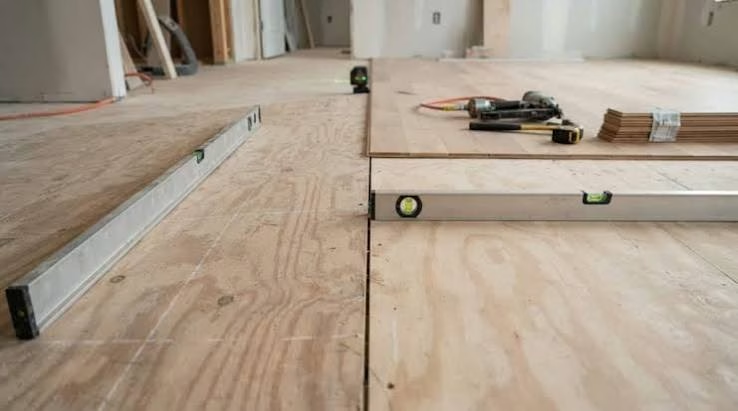
Flatness matters more than cleanliness. Rigid products like LVP and LVT need a flat substrate, typically within a small tolerance across the room . High spots get sanded down; low spots get filled with leveling compound. Floor leveling handles this before any plank goes down.
Sheet vinyl tolerates more, but not everything. Because it bends, sheet vinyl can go over minor irregularities that would cause problems for rigid planks . That does not mean it goes over debris, soft spots, or active moisture. Subfloor repair is still required where the surface is damaged.
Moisture testing is not optional on slabs. Concrete pulls moisture up from the ground. That moisture can damage the subfloor beneath the vinyl even when the vinyl itself is waterproof . We test for it before installation, and on slab foundations we specify a moisture barrier when readings call for one.
Old adhesive and staples have to go. Glue-down vinyl leaves residue. Carpet leaves tack strips and staples. Any of these left in place will show through or prevent the new floor from sitting flat. Flooring removal and prep handle this when the old floor has to come out first.
Installation Methods and What They Mean for You
Vinyl installs in several different ways, and the method affects how the floor feels, sounds, and holds up.
Click-lock floating. Planks or tiles lock together and float over the subfloor without adhesive. This is the fastest method and the easiest to replace later if one section is damaged. It is common in residential LVP. The trade-off is that the floor can sound hollow underfoot unless an underlayment is used.
Glue-down. Planks or sheet vinyl are adhered directly to the subfloor. This method feels solid and quiet, and it performs better in commercial or high-traffic settings. It is harder to remove later, but it moves less and holds up better under heavy use.
Loose-lay. Planks grip the floor through friction and their own weight, with no adhesive. This is the least stable option and the least water-resistant at the seams . It is not the right choice for rooms with moisture or heavy traffic.
Sheet vinyl installation. Sheet vinyl requires cutting, fitting, and often seam welding. It is not a DIY-friendly product, and the installation quality determines whether the floor stays watertight . Flooring installation in sheet vinyl is a specialist job.
Where Vinyl Works Best in a Home
Vinyl is versatile, but it is not universal. Some rooms make obvious sense; others need a different material.
Kitchens and laundry rooms. The strongest fit. Spills, splashes, and appliance leaks are routine. Kitchen flooring installation in LVP or sheet vinyl handles all of it. Waterproof flooring installation is the right category for these rooms.
Bathrooms. LVT and sheet vinyl both work here. Bathroom flooring installation in vinyl avoids the grout maintenance of tile while still resisting steam and splash. If the shower is being updated separately, tile shower installation stays in tile.
Living areas and bedrooms. LVP is the common upgrade from carpet. It looks like wood, cleans easily, and handles pets better than carpet or laminate. Luxury vinyl plank flooring is the standard choice.
Rentals and property turnovers. Durability and speed matter more than design. Sheet vinyl in utility areas and LVP in living areas covers most rental needs. Commercial flooring services cover multi-unit and rental scopes.
Where vinyl is the wrong choice. Stairs with open sides need special trim and are often better in carpet or wood. Rooms with active water intrusion need the source fixed first, not a new floor over it.
How a Vinyl Project Runs
- 1. Assessment. We measure the rooms, check the subfloor for flatness and moisture, and discuss which vinyl product fits each space.
- 2. Written estimate. The quote separates materials, labor, subfloor prep, and disposal so each part of the job is visible.
- 3. Prep. Old flooring comes up if needed, and the subfloor is cleaned, leveled, and tested. Subfloor repair handles any soft or damaged sections.
- 4. Installation. The chosen method goes down — click, glue, loose-lay, or sheet. Transitions to other rooms are fitted, and trim is reinstalled.
- 5. Walkthrough. We walk the finished space with you and check seams, edges, and transitions before final payment.
Areas We Serve
We provide vinyl flooring installation across the Wiregrass region. The links below go to location pages with details for each community.
For broader residential projects, see our residential flooring services page. If you are outside these communities, contact us to confirm whether your location is within our service area.
Frequently Asked Questions
Which vinyl is best for a bathroom?
LVT or sheet vinyl. Sheet vinyl is the most watertight because it has few or no seams. LVT gives a tile look with less grout maintenance. Waterproof flooring installation covers both options.
Is LVP actually waterproof?
The planks resist water, but the seams between them can let liquid pool if it sits long enough. LVP handles spills well; sheet vinyl is the fully watertight option .
Why does subfloor prep matter so much for vinyl?
Vinyl is thin and follows the surface beneath it. Bumps and dips telegraph through, and soft spots cause planks to separate or crack. Floor leveling and subfloor repair fix this before installation.
Can vinyl go over existing tile or vinyl?
Sometimes, depending on the condition and height. Flooring installation over an existing floor is a different scope and carries different risks. The assessment visit determines whether it is viable.
How long does vinyl installation take?
A single room is often a one-day project once the subfloor is ready. Larger areas take longer, and sheet vinyl can take more time than plank because of fitting and seaming. The estimate should give a realistic schedule.
Can damaged vinyl planks be replaced individually?
Often, yes. LVP and LVT can be repaired plank by plank if the damage is localized. Floor repair handles this without removing the whole floor.
Do you install vinyl in rentals and commercial spaces?
Yes. Commercial flooring services cover rental turnovers and business spaces. LVP and sheet vinyl are both common choices for durability and speed.
Do you install vinyl during remodels or new construction?
Yes. Flooring for remodels is sequenced around other trades, and new construction flooring is coordinated with the builder’s schedule.