
Waterproof Flooring Installation

Waterproof Flooring Installation in Dothan, AL
“Waterproof” is the most overused word in flooring. A plank can be waterproof and the floor can still fail. Water finds the seams, the edges, the gap around the toilet flange, and the transition at the doorway. If those points are not handled during installation, the waterproof claim on the box does not protect the subfloor underneath.
We install waterproof flooring systems across the Wiregrass with the seams and edges treated as the real work. If you are planning a project in a room that sees moisture, you can request a waterproof flooring estimate and we will assess the space before recommending a product.
What “Waterproof” Actually Means in Flooring
The word gets used loosely. Three different things get called waterproof, and they do not mean the same thing.
Waterproof plank core. Rigid-core luxury vinyl plank (LVP) and stone-plastic composite (SPC) planks have a core that does not absorb water . The plank itself will not swell or warp when wet. This is what most manufacturers mean when they print “100% waterproof” on the carton.
Waterproof floor system. A floor is only waterproof as a system if the seams, edges, and penetrations are sealed. Click-lock joints are tight but not watertight under standing water . Water that sits long enough at a seam can get through. A waterproof plank on a floor with unsealed edges is not a waterproof floor.
Waterproof with a warranty. Some products carry a waterproof warranty, but the warranty is usually conditional. It may require specific underlay, sealed edges in wet areas, or installation by an approved installer . The warranty covers the plank. It does not always cover the damage to the subfloor beneath it.
The distinction matters because homeowners often buy on the word “waterproof” and then install in a way that lets water reach the subfloor anyway.
Where Water Actually Gets In
Water does not usually come through the middle of a plank. It gets in at the edges and openings.
Perimeter gaps. Every floating floor needs an expansion gap at the walls . That gap is a direct path for water to reach the subfloor. In wet rooms, the gap should be sealed with a suitable sealant after installation.
Doorway transitions. The transition between a waterproof floor and an adjoining room is another opening. A track or trim covers it visually, but water can still travel under it if the transition is not seated properly.
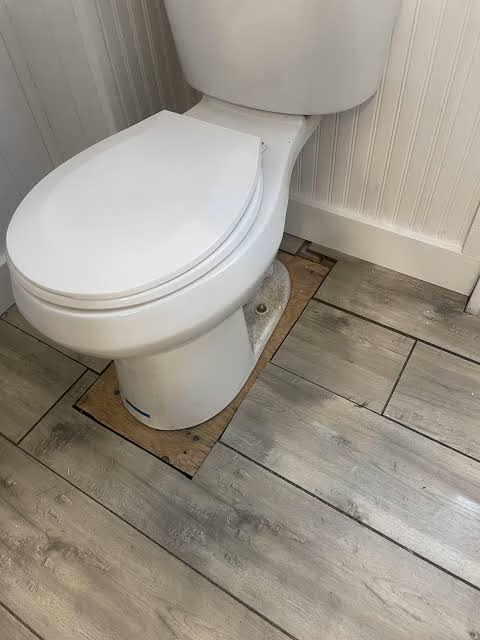
Toilet flanges and plumbing penetrations. The hole around a toilet drain or a sink supply line is a gap in the waterproof layer. Plumbers usually seal these, but the flooring installer has to coordinate with that seal. A waterproof floor with an unsealed flange is not waterproof at that point.
Seams between planks. Click-lock seams are tight. They are not welded. In a bathroom or laundry room, water that pools at a seam can wick into the joint over time . Some installations require a bead of sealant along the seam in wet areas.
Damaged or lifted edges. If a plank edge lifts or chips, water gets under it. This is why edge protection at doorways and proper transition strips matter.
The Products That Genuinely Handle Moisture
Not all waterproof products are equal. The right one depends on the room and the risk level.
Rigid-core LVP and SPC. These are the most common waterproof choices for residential work. The core is synthetic and does not absorb water . They work well in kitchens, laundry rooms, and bathrooms when the edges are sealed. Luxury vinyl plank flooring is the broad category.
Sheet vinyl. The most watertight vinyl option because it has few or no seams. It is not a plank system, but it creates a continuous surface that water cannot pass through at a joint. Sheet vinyl suits laundry rooms and utility spaces where seams are the main risk.
Waterproof laminate. Some laminate products are marketed as waterproof, but the core is still wood fiber. Waterproof laminate usually relies on sealed edges and a water-resistant coating . It is not the same as a synthetic-core plank. In a room with real water risk, synthetic core is the safer choice.
Sealed tile systems. Tile is not waterproof by itself. The waterproofing is a membrane installed beneath the tile, with the seams and edges sealed . A tile shower or bathroom floor is waterproof because of the system, not because of the tile.
Epoxy coatings. For garages and utility spaces, epoxy floor coatings create a seamless surface that water cannot penetrate at a seam.
Preparing the Subfloor for a Waterproof System
A waterproof floor over a wet subfloor is a problem waiting to happen. The subfloor has to be dry and stable before anything goes down.
Moisture testing on slabs. Concrete pulls moisture up from the ground. Even a waterproof plank will trap that moisture against the subfloor if a barrier is missing. We test for it and specify a barrier when readings call for one .
Flatness. Rigid-core planks need a flat substrate. High spots cause the click joints to stress and separate, and separated joints are where water gets in. Floor leveling corrects the surface before installation.
Subfloor repair. Soft spots, water damage, and delamination have to be fixed before a waterproof floor goes down. Subfloor repair handles this.
Old flooring removal. In many cases the old floor has to come out first. Flooring removal and disposal are part of the scope when that step is required.
Rooms Where Waterproof Flooring Earns Its Price
Waterproof flooring costs more than standard vinyl or laminate. It earns that price in specific rooms.
Bathrooms. The highest-risk room in the house. Bathroom flooring installation in rigid-core LVP handles steam and splash, provided the edges and flange are sealed. If the shower is being renovated, tile shower installation uses a separate waterproofing membrane system.
Kitchens. Dishwasher leaks, sink overflows, and spilled liquids. Kitchen flooring installation in waterproof LVP is practical. If the kitchen is being updated, backsplash tile installation is often handled at the same time.
Laundry rooms. Washing machine failures and hose leaks are common. Waterproof flooring here prevents a small leak from becoming a subfloor replacement.
Slab homes with moisture history. If a slab has tested high for moisture, a waterproof plank with a barrier is safer than laminate or engineered wood.
Rentals. Pet accidents and tenant spills are routine. Waterproof LVP is the practical choice for commercial flooring services in rental turnovers.
Where waterproof flooring does not solve the problem. If a room has active water intrusion — a leaking pipe, a roof leak, a foundation issue — the source has to be fixed first. Waterproof flooring is not a substitute for fixing the water.
How a Waterproof Flooring Project Runs
1. Assessment. We measure the rooms, test the subfloor for moisture, and check flatness. This is where we confirm whether a barrier or extra sealing is needed.
2. Written estimate. The quote separates materials, underlay or barrier, labor, subfloor prep, and disposal so each part is visible.
3. Prep. Old flooring comes up if needed, and the subfloor is cleaned, leveled, and tested. Flooring removal and subfloor repair happen at this stage.
4. Underlay or barrier. If the slab needs a moisture barrier, it goes down before the planks. Some rigid-core products have attached underlay; others need a separate layer .
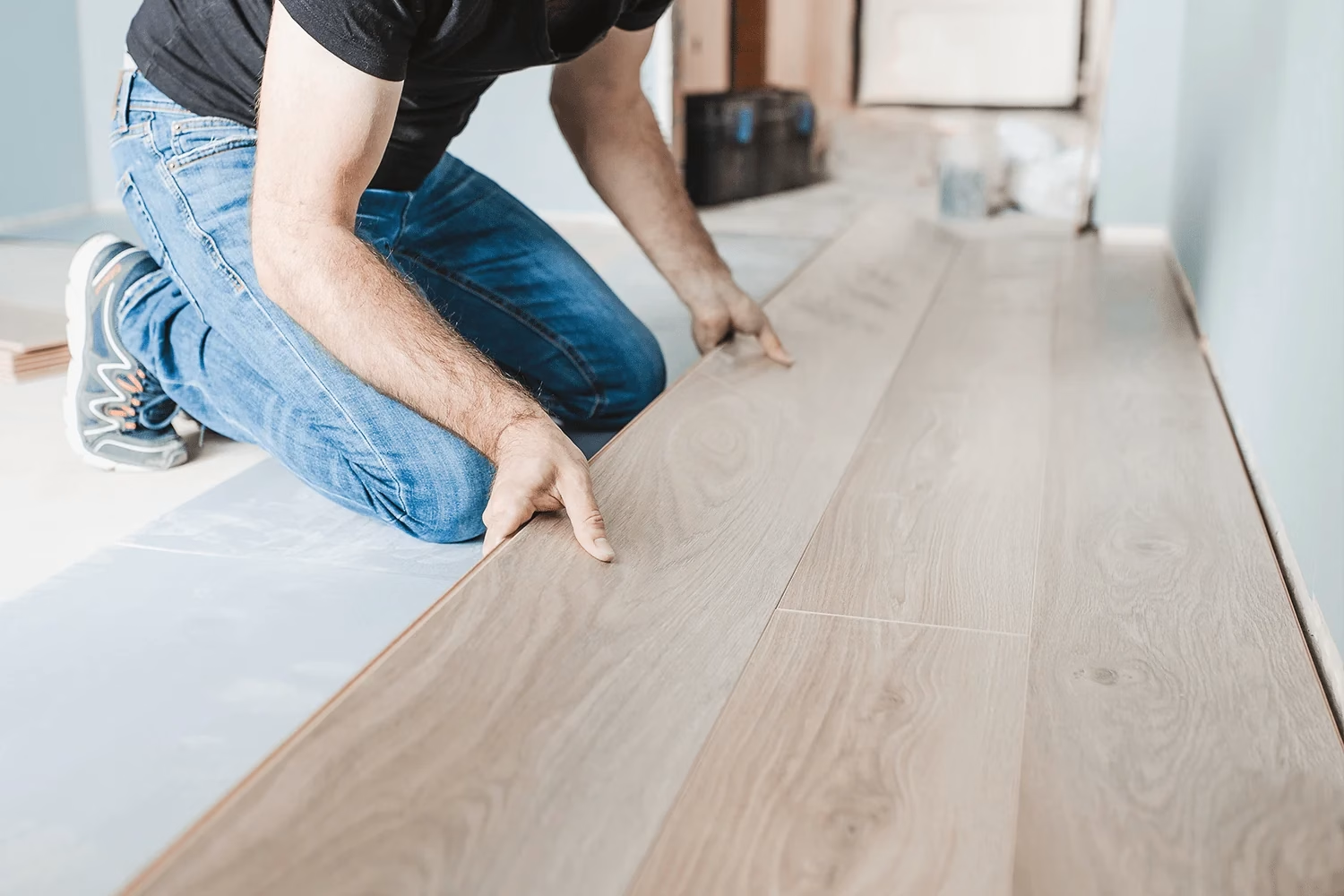
5. Installation. Planks are installed with the proper expansion gap at walls. In wet rooms, the perimeter gap is sealed after installation .
6. Sealing at penetrations. Toilet flanges, supply lines, and transitions are checked and sealed where needed.
7. Walkthrough. We walk the finished floor with you and check seams, edges, and transitions before final payment.
If the project is part of a larger renovation, flooring for remodels is sequenced around other trades. For new construction, new construction flooring is coordinated with the builder’s schedule.
Areas We Serve
We provide waterproof flooring installation across the Wiregrass region. The links below go to location pages with details for each community.
For broader residential projects, see our residential flooring services page. If you are outside these communities, contact us to confirm whether your location is within our service area.
Frequently Asked Questions
Is waterproof flooring really 100% waterproof?
The plank core is waterproof. The floor is only waterproof as a system if the seams, edges, and penetrations are sealed. Water that sits at an unsealed edge can still reach the subfloor .
Which waterproof flooring is best for a bathroom?
Rigid-core LVP or SPC with sealed edges. Sheet vinyl is also fully watertight because it has few seams. Waterproof laminate relies on sealed edges and is less reliable in wet rooms .
Does waterproof flooring need a moisture barrier on concrete?
Often, yes. The plank is waterproof, but moisture from the slab can damage the subfloor beneath it. We test for slab moisture and specify a barrier when readings call for one .
Can waterproof flooring go over existing tile?
Sometimes, depending on the condition and height. Flooring installation over an existing floor is a different scope and carries different risks. The assessment visit determines whether it is viable.
Do the seams need to be sealed?
In wet rooms, yes. The perimeter gap and any seams that could hold water should be sealed. Click-lock joints are tight but not watertight under standing water .
Can waterproof flooring be repaired if water gets underneath?
Sometimes. If the damage is localized, planks can be replaced and the subfloor dried. If the subfloor has failed across the room, floor replacement is the practical answer.
Do you install waterproof flooring in rentals and businesses?
Yes. Commercial flooring services cover rental turnovers and business spaces. Waterproof LVP is the common choice for pet and spill risk.
Do you install waterproof flooring during remodels or new construction?
Yes. Flooring for remodels is sequenced around other trades, and new construction flooring is coordinated with the builder’s schedule.