
Tile Flooring Installation in Ashford Alabama

Tile Flooring Installation in Ashford Alabama, AL
Tile failures in Ashford Alabama usually follow a pattern. The tile looks fine for a year, then cracks start appearing along a straight line, or a few tiles start sounding hollow when you walk on them. The homeowner blames the tile. The real cause is almost always the house underneath it.
We install porcelain and ceramic tile in Ashford Alabama homes, and we spend more time on the substrate than on the tile selection. If you want a tile floor that stays intact, you can request a tile flooring estimate and we will assess the substrate before recommending anything.
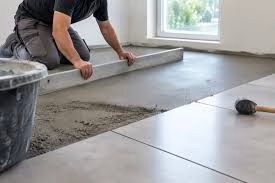
What Ashford Alabama Houses Do to a Tile Floor
The building decides whether a tile floor succeeds. In Ashford Alabama, two structural patterns cause most of the failures.
Slab foundations with moisture. Many Ashford Alabama homes sit on concrete slabs. Concrete pulls moisture up from the ground, and that moisture loosens thinset from below. Because of that, we test for slab moisture before installation, and we specify a barrier or uncoupling membrane when readings call for one.
Older pier-and-beam floors. Older Ashford Alabama homes often sit on raised foundations with wood subfloors. Those floors flex slightly under load and move with seasonal humidity. Tile cannot flex, so a wood subfloor needs proper prep and often an uncoupling membrane before tile goes down. Subfloor repair handles any soft or damaged sections.
Shrinkage cracks in older slabs. Concrete slabs develop cracks as they cure and settle over decades. Those cracks travel up into tile unless an uncoupling membrane separates the two layers. Since older Ashford Alabama slabs are common, we plan for this during the assessment.
Additions and mixed construction. Some Ashford Alabama homes have an original section and a later addition built on a different foundation. Each section needs its own substrate check, because tile that works on one side of the house may fail on the other.
Which Rooms in Ashford Alabama Homes Suit Tile
Tile works brilliantly in some rooms and poorly in others. The room decides as much as the tile.
Bathrooms. The strongest fit. Steam, splash, and wet towels are routine. Bathroom flooring installation in porcelain handles all of it. If the shower is being updated, tile shower installation is often part of the same project.
Kitchens. Spills, appliance leaks, and heavy traffic. Kitchen flooring installation in porcelain works well. If the kitchen is being renovated, backsplash tile installation is often handled at the same time.
Entryways and mudrooms. Wet shoes, grit, and constant traffic. Tile handles all of it and cleans up easily. In Ashford Alabama, where afternoon storms arrive fast, an entryway tile floor makes practical sense.
Laundry rooms. Water risk is high. Porcelain is the practical choice.
Living areas and bedrooms. Tile works, but it feels hard and cold underfoot. Some homeowners prefer luxury vinyl plank flooring or carpet installation in these rooms for comfort. Ceramic is a reasonable choice where the decorative range matters more than warmth.
Garages and utility spaces. Tile can go in a garage, but vehicle loads and temperature swings make it risky without proper movement joints. Epoxy floor coatings are often the more practical choice in those spaces.
Porcelain or Ceramic for an Ashford Alabama Home
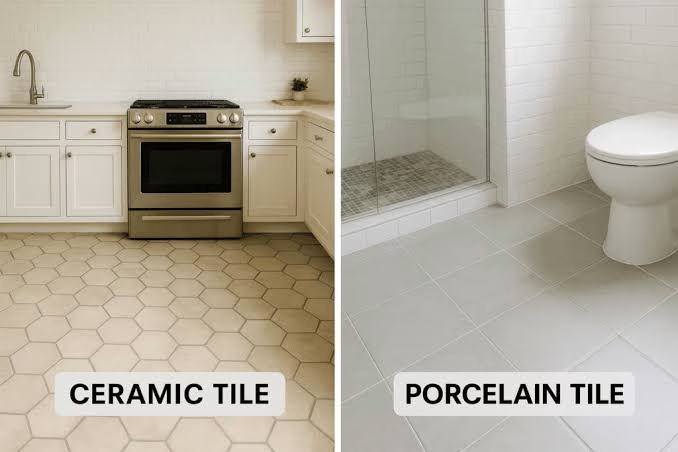
Both are clay-based tiles, but they behave differently. The room and the moisture level decide which one fits.
Porcelain. Fired at higher temperatures, so it absorbs very little water. Porcelain suits Ashford Alabama bathrooms, kitchens, laundry rooms, and entryways. It resists stains and heavy traffic better than ceramic, and it handles the humidity that comes with local summers.
Ceramic. Fired at lower temperatures, lighter, and more porous. Ceramic absorbs more water than porcelain, so it is a poor fit in wet rooms. It works well in dry living areas and bedrooms, and it costs less.
Large-format tile. Tiles larger than 15 inches need a flatter substrate and a medium-bed mortar. They also need a leveling system to prevent lippage, which is the height difference between adjacent tiles that you can feel underfoot. Large-format tile looks clean and modern, but it demands more prep and more care.
Where each belongs in Ashford Alabama. Porcelain in bathrooms, kitchens, laundry rooms, and entryways. Ceramic in living areas and bedrooms. If a room sees routine moisture, porcelain is the safer choice.
Preparing an Ashford Alabama Subfloor for Tile
Tile follows the surface beneath it. A flat, sound, dry substrate is not optional.
Flatness. Standard tile needs a substrate that is flat within a small tolerance. Large-format tile needs it flatter still. Floor leveling corrects the surface before any tile goes down.
Moisture. On slabs, we test for moisture coming up through the concrete. On pier-and-beam floors, we check the wood subfloor and the joists. Subfloor repair handles any soft or damaged sections.
Uncoupling membrane. This thin sheet sits between the substrate and the tile. It lets the substrate move slightly without transferring that movement into the tile. Because Ashford Alabama has both slab and wood subfloors, the membrane question comes up on almost every project.
Old flooring. Tile sometimes goes over existing hard surfaces, but only when the surface is sound and the height works. In many cases, the old floor has to come out first. Flooring removal and disposal are part of the scope when that step is required.
How We Run a Tile Project in Ashford Alabama
1. Assessment. We measure the rooms, check the substrate for flatness and moisture, and discuss porcelain versus ceramic. During this visit, we also flag whether an uncoupling membrane or floor leveling is needed.
2. Written estimate. The quote separates materials, labor, substrate prep, membrane, and disposal, so each part of the job is visible.
3. Prep. Old flooring comes up if needed, and the substrate is cleaned, leveled, and tested. Flooring removal and subfloor repair happen at this stage.
4. Layout and dry fit. We plan the tile layout before any mortar goes down. Centering the pattern, planning cuts at the edges, and checking the layout against doorways prevents awkward cuts and wasted material.
5. Mortar and tile. We apply thinset with the correct notched trowel, comb it in one direction, and press the tile firmly into the mortar. For large-format tile, we use a medium-bed mortar and a leveling system.
6. Grout. After the mortar cures, we grout the joints, clean the surface, and allow the grout to cure.
7. Walkthrough. We walk the finished floor with you and check for lippage, hollow spots, and clean transitions before final payment.
Repairing Tile in an Ashford Alabama Home
Tile is durable, but it is not permanent. When it fails, the fix depends on what went wrong.
Cracked or loose tile. Individual tiles can sometimes be replaced if matching material is available. Floor repair handles localized damage. If the crack comes from substrate movement, replacing the tile without fixing the substrate will lead to the same failure again.
Widespread cracking or hollow-sounding tile. This usually means the substrate or the mortar bed has failed. Floor replacement is often the practical answer because patching will not solve the underlying problem.
Refinishing does not apply. Unlike hardwood floor refinishing, tile cannot be sanded or refinished. When the surface is worn or damaged, it gets replaced.
Grout replacement. Dirty or cracked grout can sometimes be replaced without removing the tile. This is a maintenance task rather than a full replacement.
Tile During Remodels and New Builds
Tile often sits inside a larger project. Timing and sequencing matter.
During a renovation, flooring for remodels is sequenced around cabinet, plumbing, and trim work so the tile is not damaged by other trades. For new construction, new construction flooring goes in before final finishes. If the project involves structural or plumbing changes, our flooring contractor page explains the broader scope.
If the previous floor was damaged by water, our floor replacement services page covers how we handle tear-out and disposal once the source of the damage is fixed.
Areas We Serve
We provide tile flooring installation across the Wiregrass region. The links below go to location pages with details for each community.
For broader residential projects, see our residential flooring services page. If you are outside these communities, contact us to confirm whether your location is within our service area.
Frequently Asked Questions
Is Ashford Alabama included in your tile flooring service area?
Yes. Ashford Alabama is part of our regular Wiregrass service area alongside the other communities listed above. Scheduling depends on project size and current workload, so it helps to reach out early if you have a target date.
Is porcelain or ceramic better for an Ashford Alabama bathroom?
Porcelain. It absorbs less water, resists moisture better, and holds up in wet rooms. Ceramic absorbs more water and works better in dry rooms.
Why do tiles crack in Ashford Alabama homes?
Almost always because of movement beneath the tile, insufficient mortar coverage, or missing movement joints. Slab cracks and wood subfloor flex are both common in local homes, so substrate prep matters more here than in many other regions.
Do Ashford Alabama homes need an uncoupling membrane under tile?
Often, yes. Slab foundations with shrinkage cracks and older wood subfloors both benefit from a membrane that separates the tile from the substrate. The assessment visit determines whether it is needed for your home.
How long does tile installation take in Ashford Alabama?
A single room is often a two- to three-day project once the substrate is ready. Mortar curing and grout curing add time. The estimate should give a realistic schedule.
Can tile go over an existing concrete slab in Ashford Alabama?
Yes, with proper prep. The slab needs to be flat, clean, and free of curing compounds. Moisture testing and possibly an uncoupling membrane are part of the assessment.
Can cracked tiles be replaced individually?
Sometimes, if matching material is available and the cause of the failure is addressed. Floor repair handles localized damage. If the substrate has failed, replacing tile alone will not solve the problem.
Do you install tile during remodels or new construction in Ashford Alabama?
Yes. Flooring for remodels is sequenced around other trades, and new construction flooring is coordinated with the builder’s schedule.